STU Residence Hall: How Student Housing Design can improve mental health and student well-being.
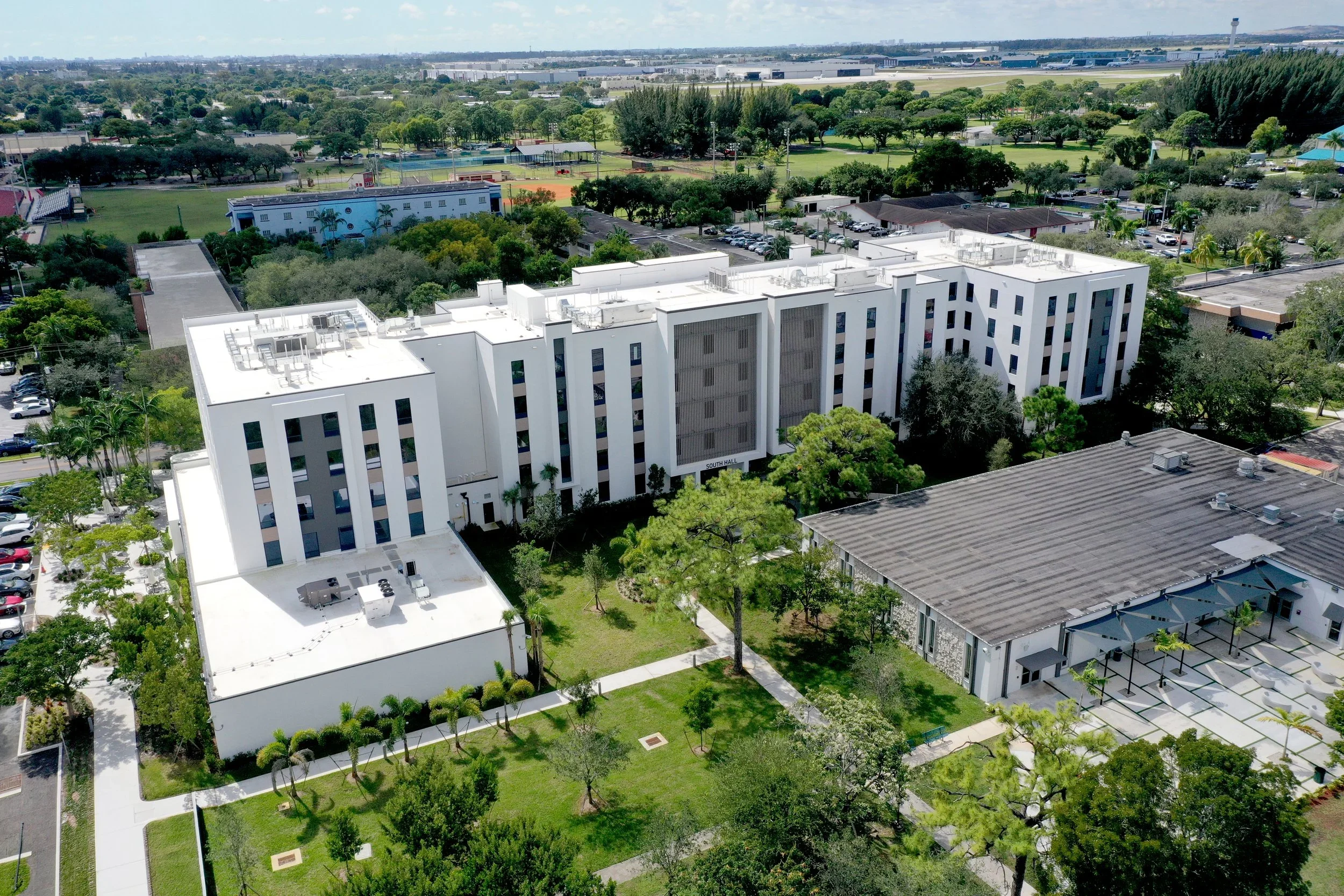
While the St. Thomas University Residence Hall establishes 500 new on-campus beds, its real significance is that it demonstrates, in built form, a thesis that higher education is now learning to articulate more clearly: student housing is an infrastructure for improved mental health.
If the last decade has taught universities anything, it is that wellbeing is not a peripheral student services issue. It is a core determinant of academic persistence, social belonging, and institutional stability. The built environment cannot replace counseling, mentorship, or financial support, but it can make these efforts more effective by shaping the daily conditions of student life. Housing, in particular, is the one place students cannot opt out of. It is where their routines consolidate, where their loneliness compounds or dissolves, where their sleep stabilizes or erodes, and where they either develop supportive peer networks or retreat into isolation.
Housing Phase III is a strong example of how architecture can intentionally bias student life toward healthier outcomes. It does this through planning that reduces isolation without sacrificing privacy, environmental design that improves comfort and stress reduction, and a campus-urban strategy that supports everyday movement, encounter, and belonging.The common failure mode of large residence halls is not simply that they are big. It is that they are big in a way that feels indifferent. Large buildings containing repetitive programmatic elements often end up feeling oppressive, looming, or banal. They can become long corridors of closed doors and identical windows, where students move from room to classroom and back again without meaningful social friction. In these environments, it is easy to disappear. It is easy to withdraw, as every student affairs professional knows, often precedes academic decline and mental health crisis.
The building as a map: reducing stress through legibility
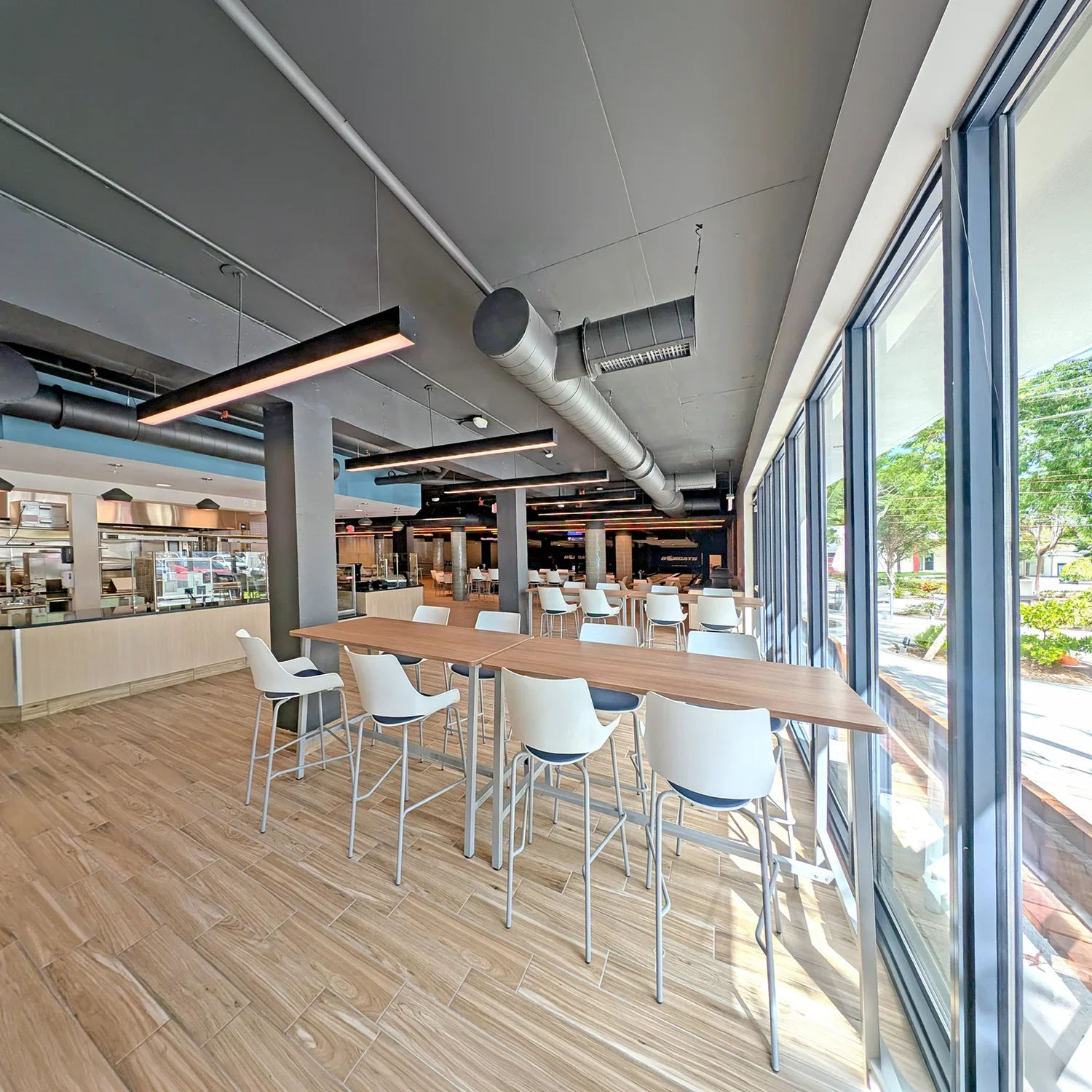
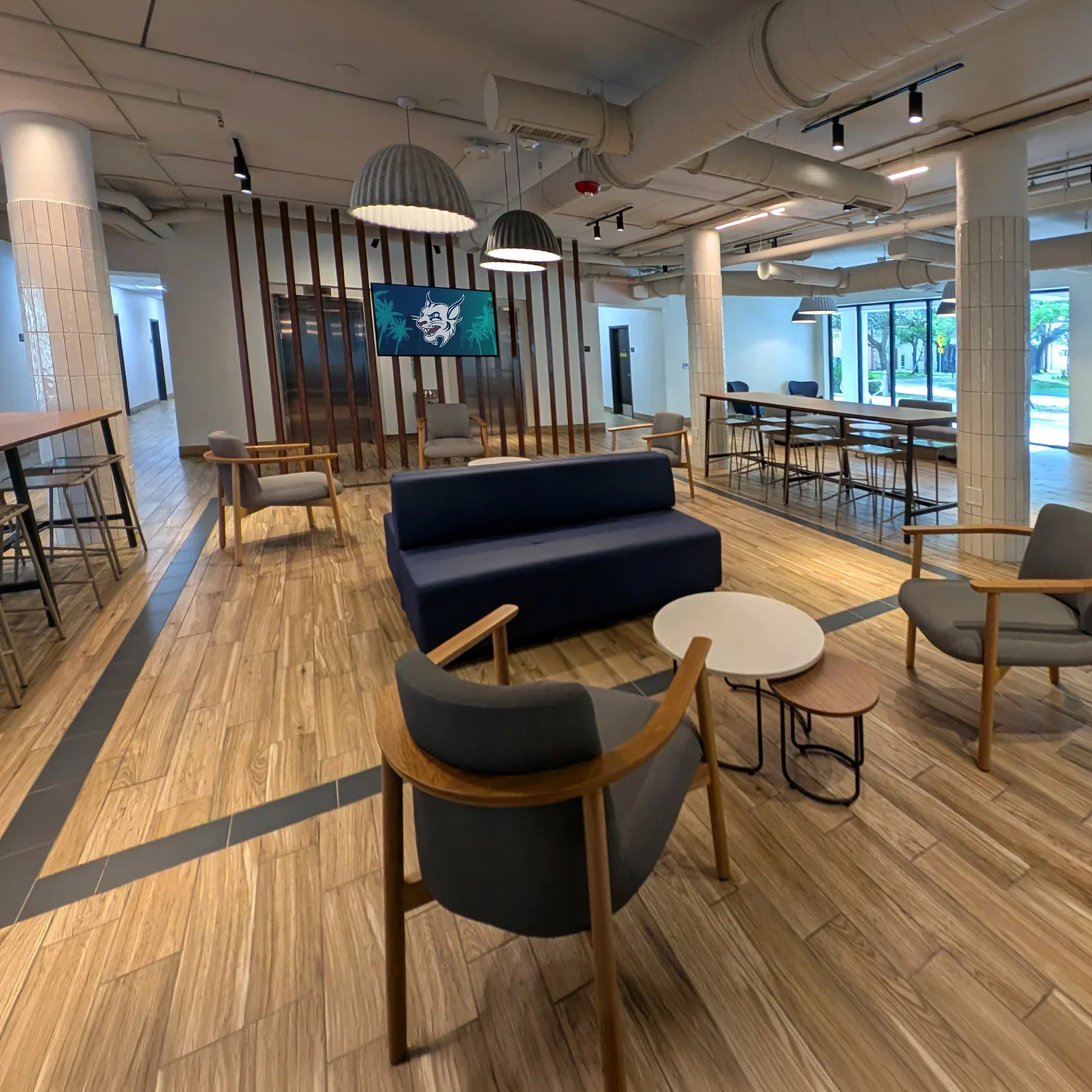
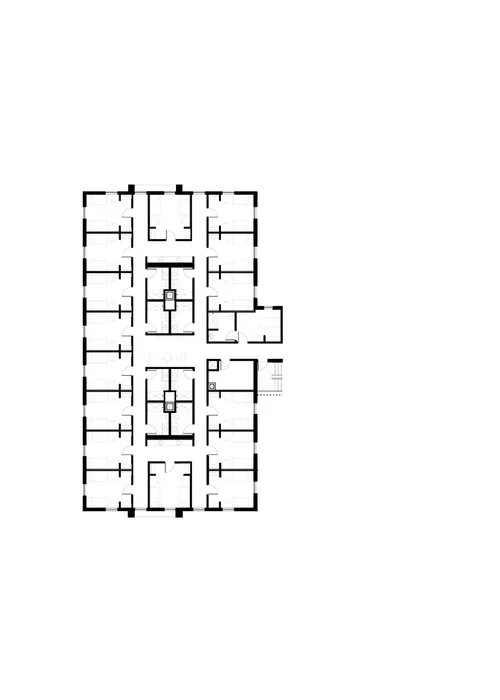
Stress is not only psychological. It is often environmental. Confusing circulation, dead ends, and monotonous corridors subtly tax attention and increase agitation, especially for new students. Housing Phase III addresses this through clarity of organization and legibility of common spaces. The layout reinforces intuitive wayfinding, with shared zones positioned where students will naturally find them.
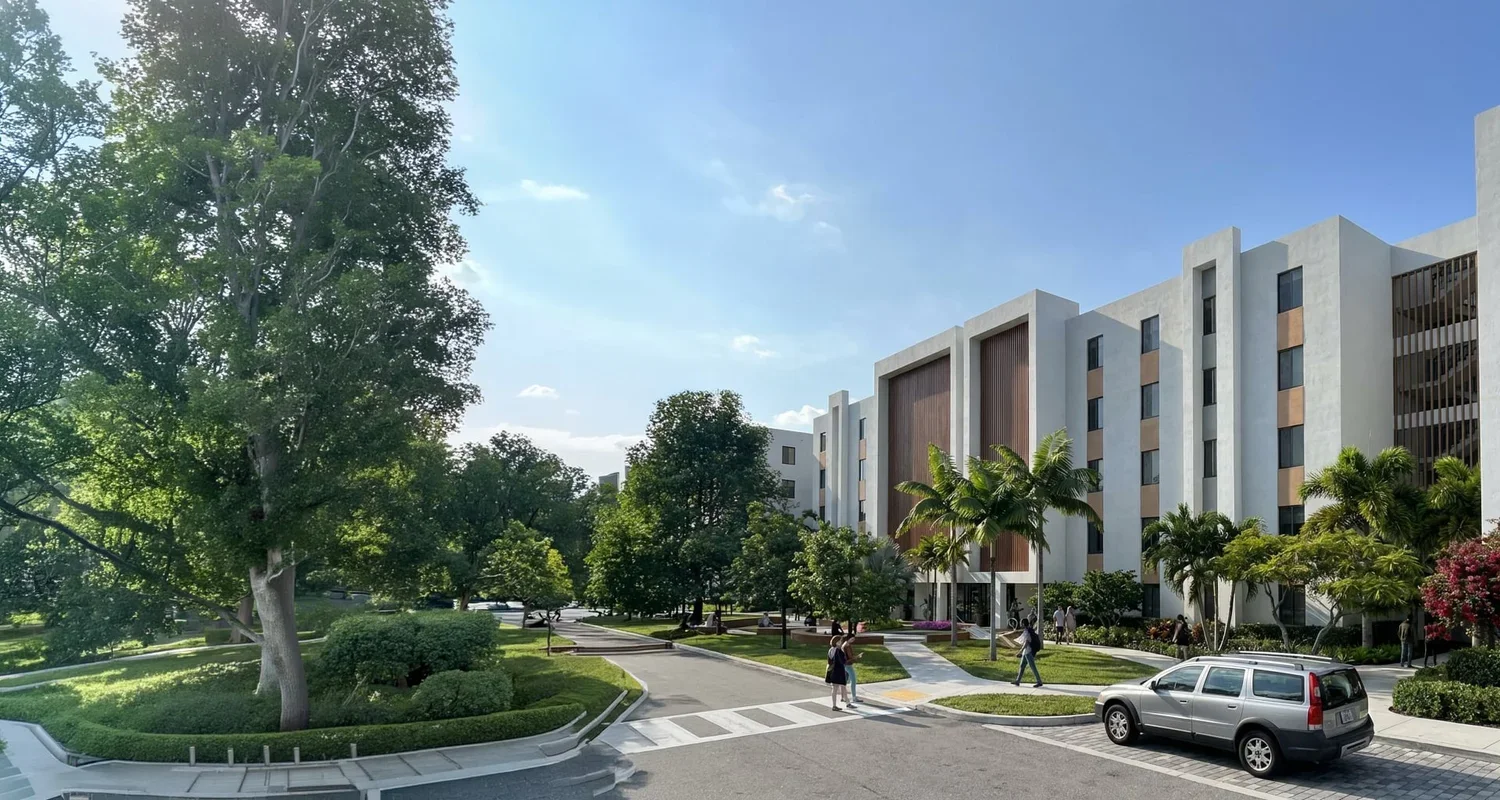
Just as important, the building communicates its interior life externally. The exterior design expresses the program contained within. When architecture becomes legible, it becomes welcoming. Students can sense where activity is happening, where shared kitchens are located, where courtyards open up, and where entries invite movement. This reduces the feeling of being trapped in an anonymous interior. It makes the building feel like a comprehensible environment rather than a system.
For student wellbeing, that matters. Legibility is a form of care. It tells students they are expected, that the building was made for them, that they do not need to fight the environment to belong in it.
Outdoor rooms and the psychology of relief
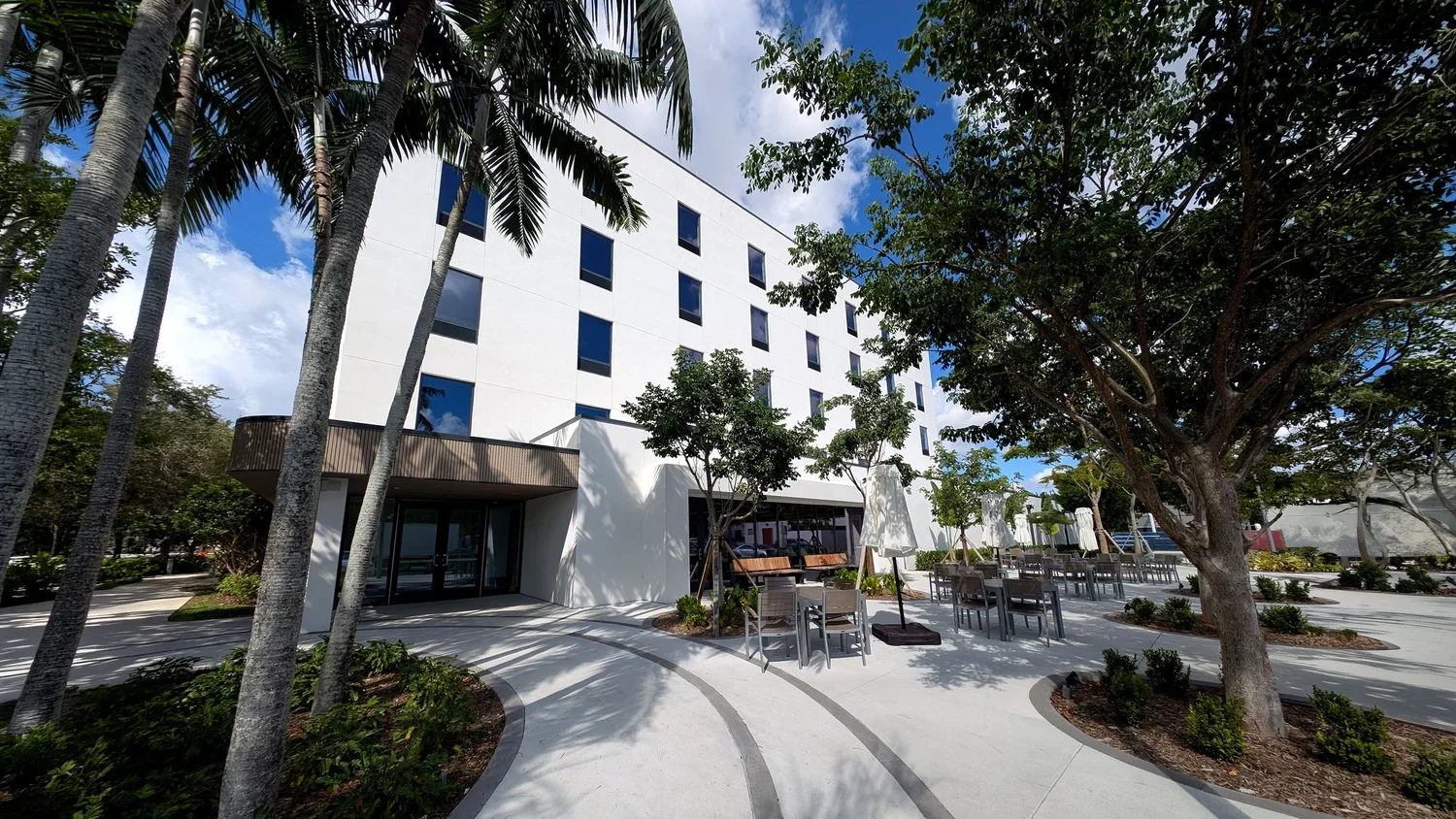
Housing Phase III is also structured around exterior spaces that act as relief valves. Large recesses between formal building elements create niches and courtyards where students can meet, relax, and store bicycles. These are not ornamental voids. They are outdoor rooms that diversify the daily experience of living in a large building. This strategy supports mental health in at least three ways.
First, it creates options for social interaction that are less intense than interior lounges. Outdoor conversation often feels easier than indoor conversation. There is air, sound, and visual distraction. Students can talk without feeling scrutinized. Second, it provides access to nature and daylight, which are widely associated with stress reduction and emotional regulation. Florida’s climate makes this especially relevant, and the project leans into it. Third, it breaks up scale. Courtyards and niches prevent the building from reading as an oppressive mass. Students experience the building as a sequence of smaller places rather than a single looming object.
At the end of the courtyard sequence, an open-air stair extends circulation into the outdoors. This is a subtle but powerful move. Rather than treating circulation as a purely interior, conditioned corridor, the project makes movement an exterior experience at key moments. Students step into light and breeze. They see the campus. They feel weather. This strengthens connection to place and disrupts the claustrophobia that can accumulate in large residential buildings. The stair is covered using sustainable recycled siding that provides shade and creates a visual relationship to other new structures on campus. It is both performance and identity: a shading element that also contributes to the campus language. Here again, the building demonstrates that wellbeing is not separate from architecture. It is embedded in the decisions.
Climate-responsive design as comfort and mental health
Wellbeing is also physiological. Poor thermal comfort, glare, and excessive heat increase irritability, reduce sleep quality, and make it harder to focus. Housing Phase III treats the building envelope as a mental health strategy as much as an energy strategy. Every third column of windows is enveloped in a heavy, vertical sunshade device. These devices mark the shared kitchen spaces within while also shielding units from direct sun without sacrificing views. In Florida, that shading is not aesthetic. It is functional. It reduces solar heat gain, lowers cooling demand, and stabilizes interior comfort. This matters because students study, sleep, and recover in their rooms. If their rooms overheat, glare becomes oppressive, or AC cycling creates noise and dryness, their baseline stress rises. Environmental discomfort becomes a low-grade burden. By controlling solar exposure through integrated shading, the building supports more stable interior conditions and reduces the energy needed to keep the building cool.
Material choices reinforce this performance approach. The white façade and roof were selected for their high albedo, reflecting solar radiation and helping reduce the urban heat island effect. This improves the outdoor comfort of the adjacent student path and courtyards. It also signals a larger ethic: the building is not only designed for initial impact but for long-term stewardship and campus resilience. Meanwhile, dark window tint helps prevent solar heat gain within units and common spaces alike, reducing glare and supporting comfort throughout the day. The result is a consistent environmental baseline that helps students feel physically at ease. Physical ease is not a luxury. It is a precondition for psychological stability.
Recreation as a mental health amenity: the bowling alley
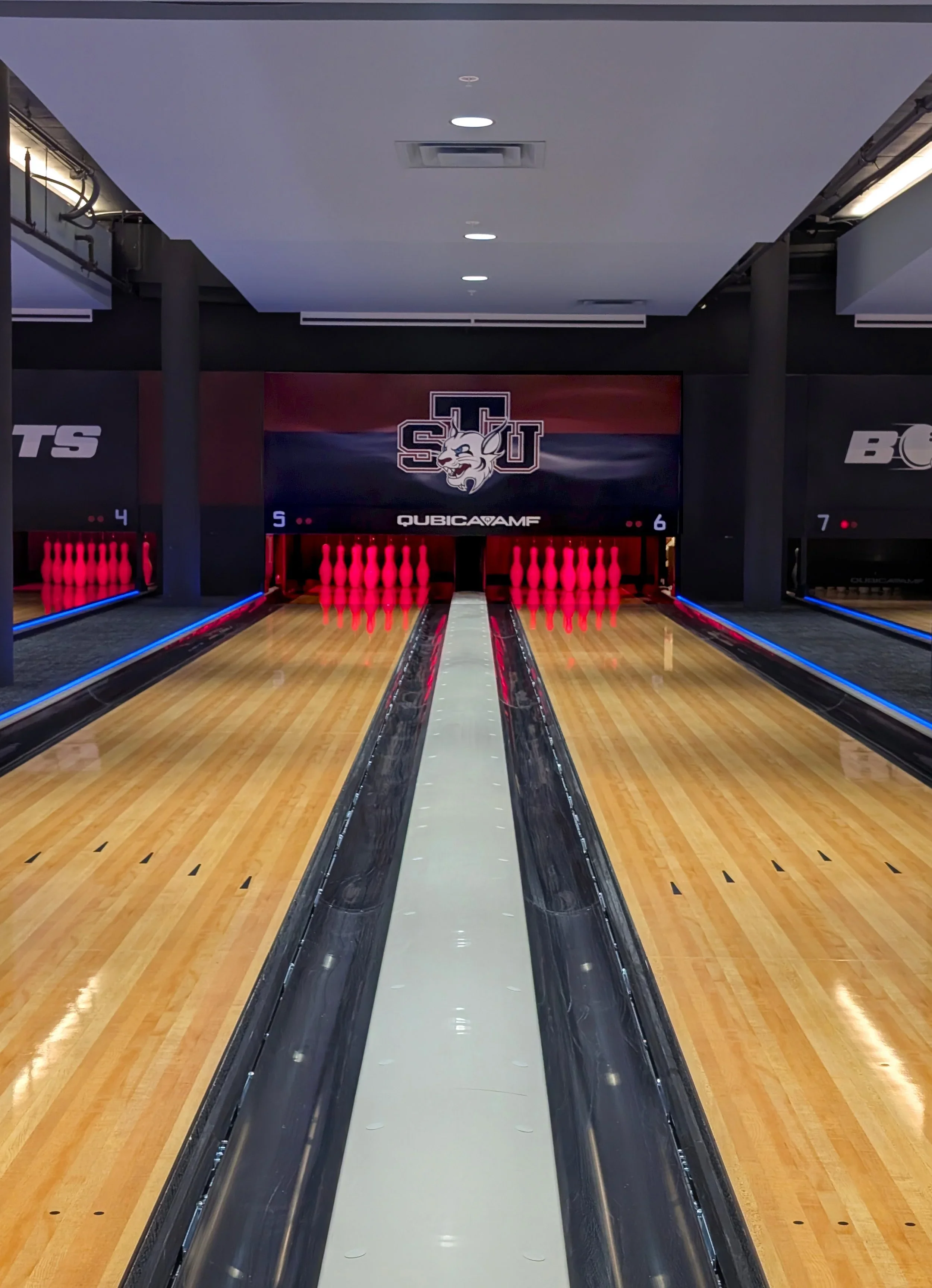
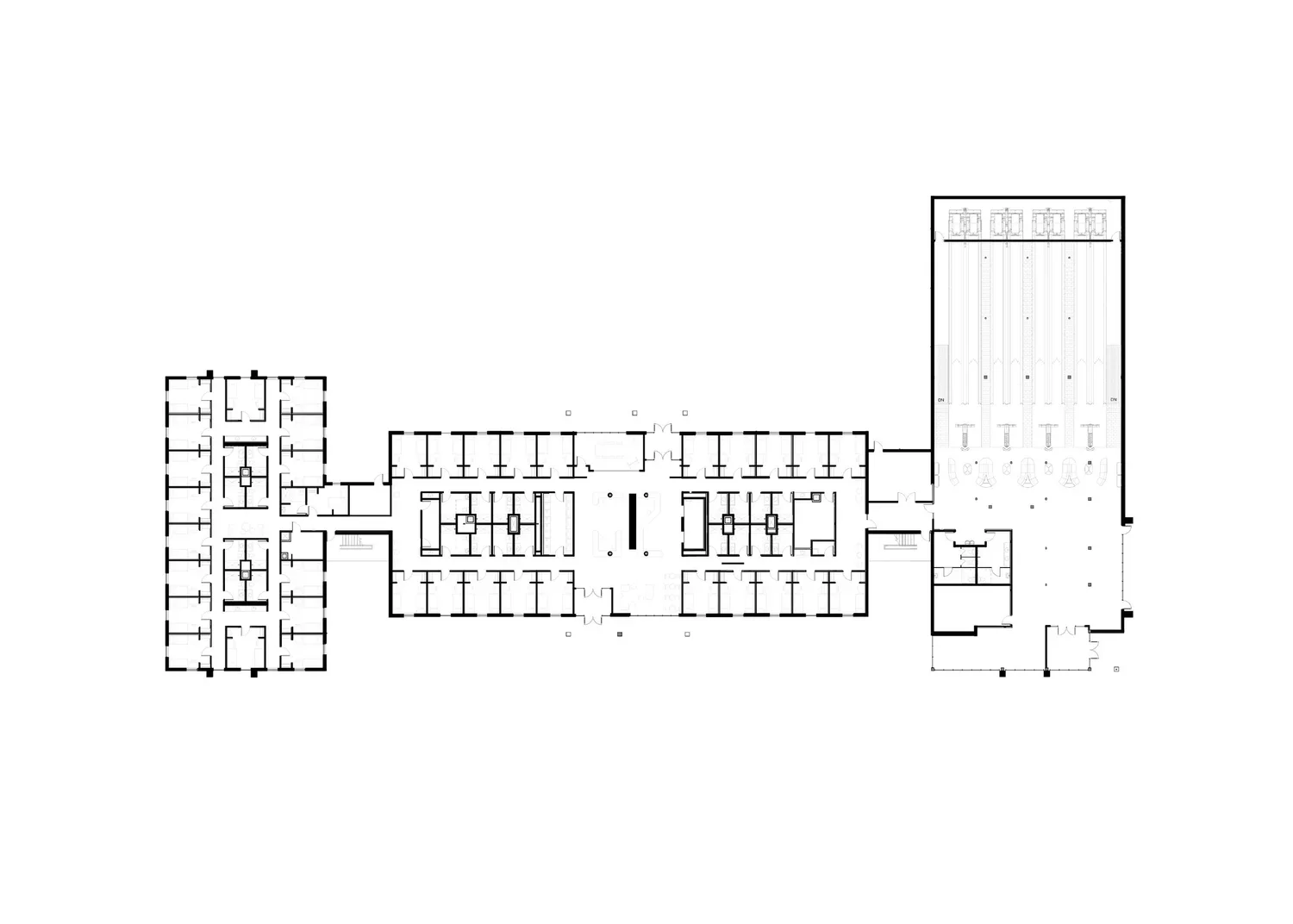
The most conspicuous programmatic feature of Housing Phase III is the eight-lane bowling alley on the ground floor of the east wing, with four floors of student housing above. It provides a state-of-the-art facility for the university’s bowling team, but more importantly, it functions as a social hub that activates the building beyond traditional residence hall hours. Recreation is not peripheral to wellbeing. Physical activity, play, and social leisure are fundamental to stress relief and emotional regulation. A bowling alley is not simply entertainment. It is a structured opportunity for students to gather without the pressure of formal events, and without the social risks that often accompany nightlife or off-campus options.
Paired with alternative dining and gathering spaces, the bowling program creates a place where peer-to-peer relationships can form naturally. These relationships are one of the strongest protective factors against mental health decline. Students who have friends, who are seen, who have places to go that feel safe and welcoming, are more likely to persist through academic and personal challenges. By integrating this amenity into the housing building itself, the project also reduces barriers to use. Students do not need transportation. They do not need to leave campus. They can participate casually. That accessibility is a key element of inclusive wellbeing design.

A formal model for housing as wellness infrastructure
Student wellbeing is deeply tied to belonging, and belonging is spatial. Housing Phase III strengthens the campus public realm by forming a new street wall along a wide, landscaped student path. This move does not only define an edge. It helps build a sense of campus continuity. The building becomes part of a coherent environment, not an isolated object. A strong campus edge can support wellbeing by increasing the likelihood of casual encounter. Students walking along a defined path, adjacent to an active building with visible social life, are more likely to stop, greet, and linger. The landscape and path become social infrastructure. The building participates in that infrastructure by shaping the space and providing destinations along it.
Housing Phase III ultimately demonstrates a holistic approach to student housing design. It integrates privacy and community through pod planning. It increases social opportunities through dispersed commons and central floor living rooms. It reduces environmental stress through climate-responsive envelope design, shading, high-albedo materials, and tinted glazing. It supports emotional regulation and social belonging through courtyards, outdoor circulation, and varied exterior spaces for study and gathering. And it creates a campus destination through recreation and dining that strengthens daily life.
The lesson is not that every campus needs a bowling alley or the same façade language. The lesson is that student housing can be deliberately designed as a mental health intervention. Not in a clinical sense, but in the architectural sense: shaping the everyday conditions that determine whether students feel isolated or connected, stressed or at ease, anonymous or recognized.
If universities want to improve mental health outcomes, they must treat housing not as a cost center but as an opportunity for care. Housing Phase III shows what that looks like when it is taken seriously: a building that is not simply efficient, but humane, climate-smart, socially intelligent, and genuinely attentive to the lived experience of students.