St Thomas University Student Housing
ST THOMAS UNIVERSITY
Student Housing Phase III
Location: Miami Gardens, FL
Completion Date: 2025
Project Size: 121,040 SF
Where campus life converges
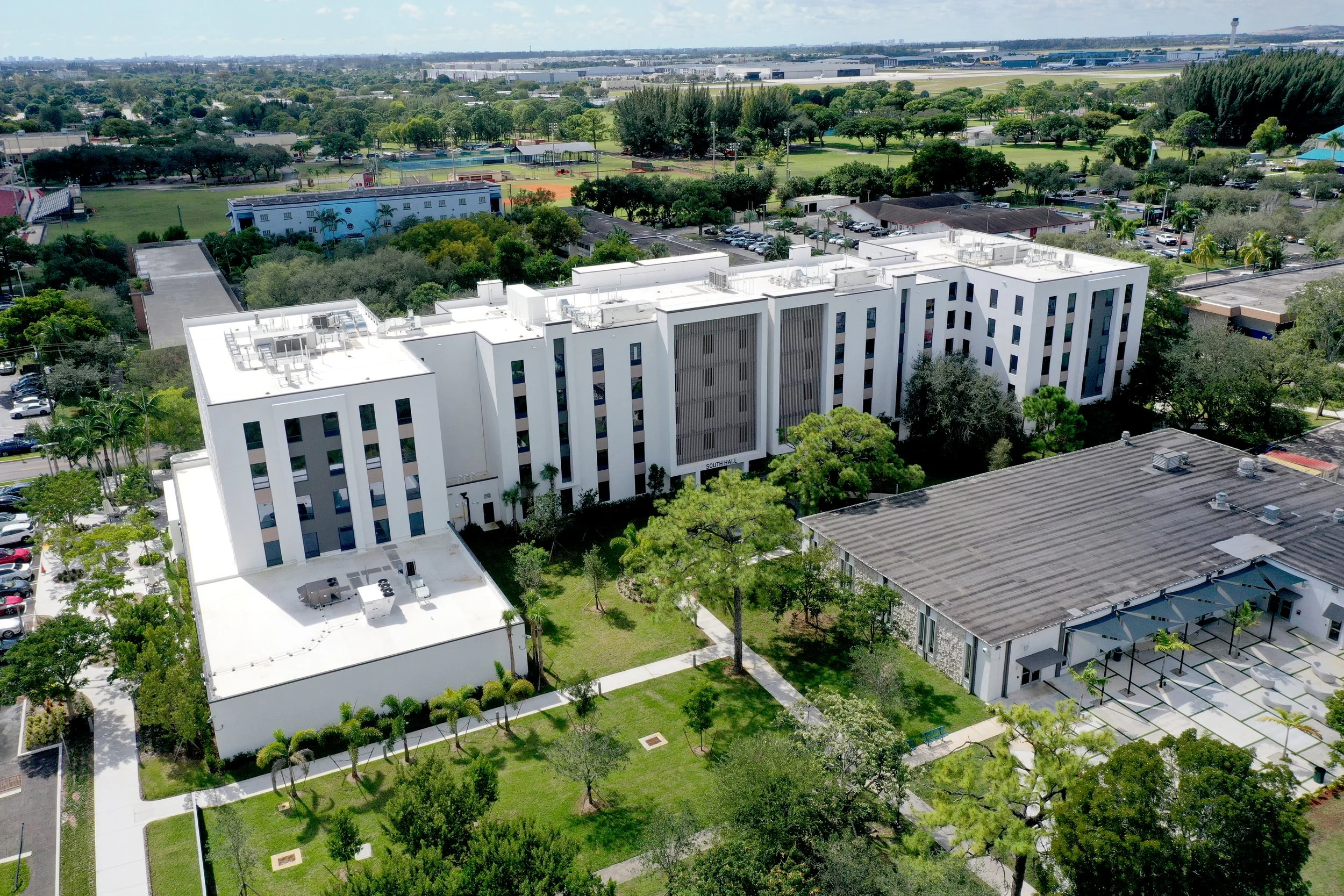
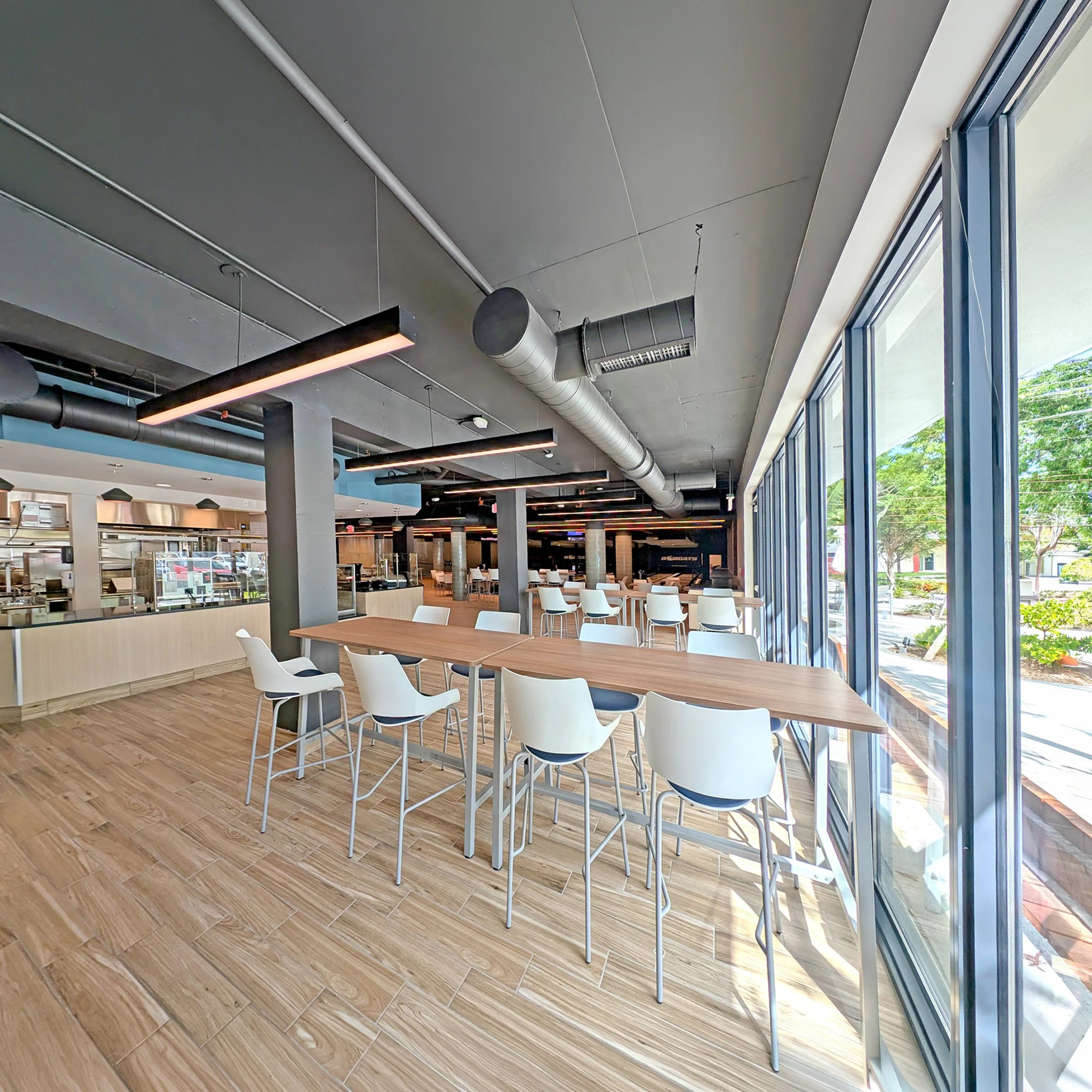
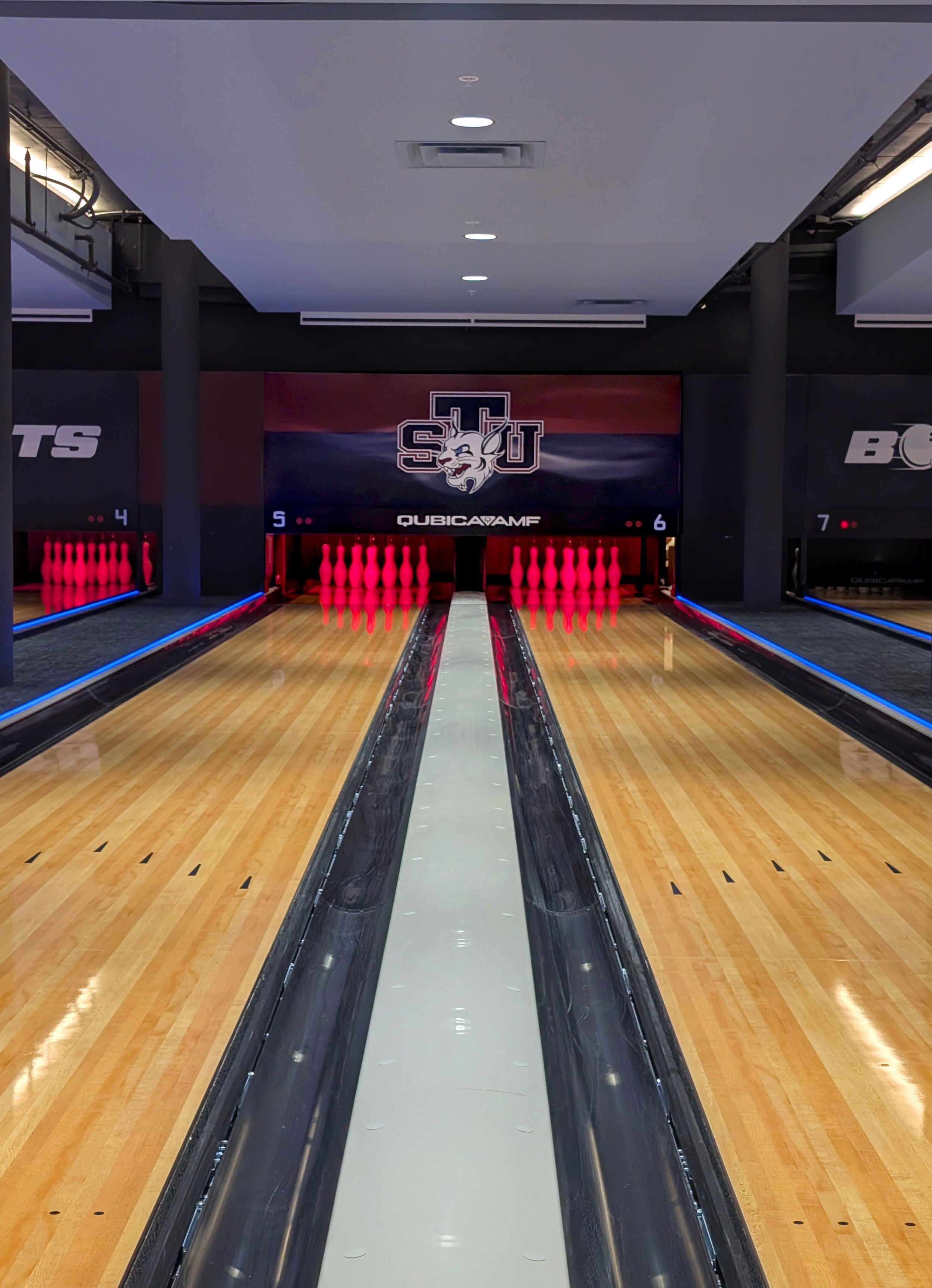
Responding to the design language established by MKC’s Phase II Student Housing Center, St. Thomas University Housing Phase III creates a new confluence for student life while integrating seamlessly into the existing campus fabric. The project combines a residence hall for more than 500 students with a new bowling alley and recreation space, positioning the building as both home and daily destination.
As the largest residence hall constructed on campus to date, Housing Phase III functions not as a monolithic object, but as an active piece of campus infrastructure that strengthens student life and identity.
Residential Planning & Student Community
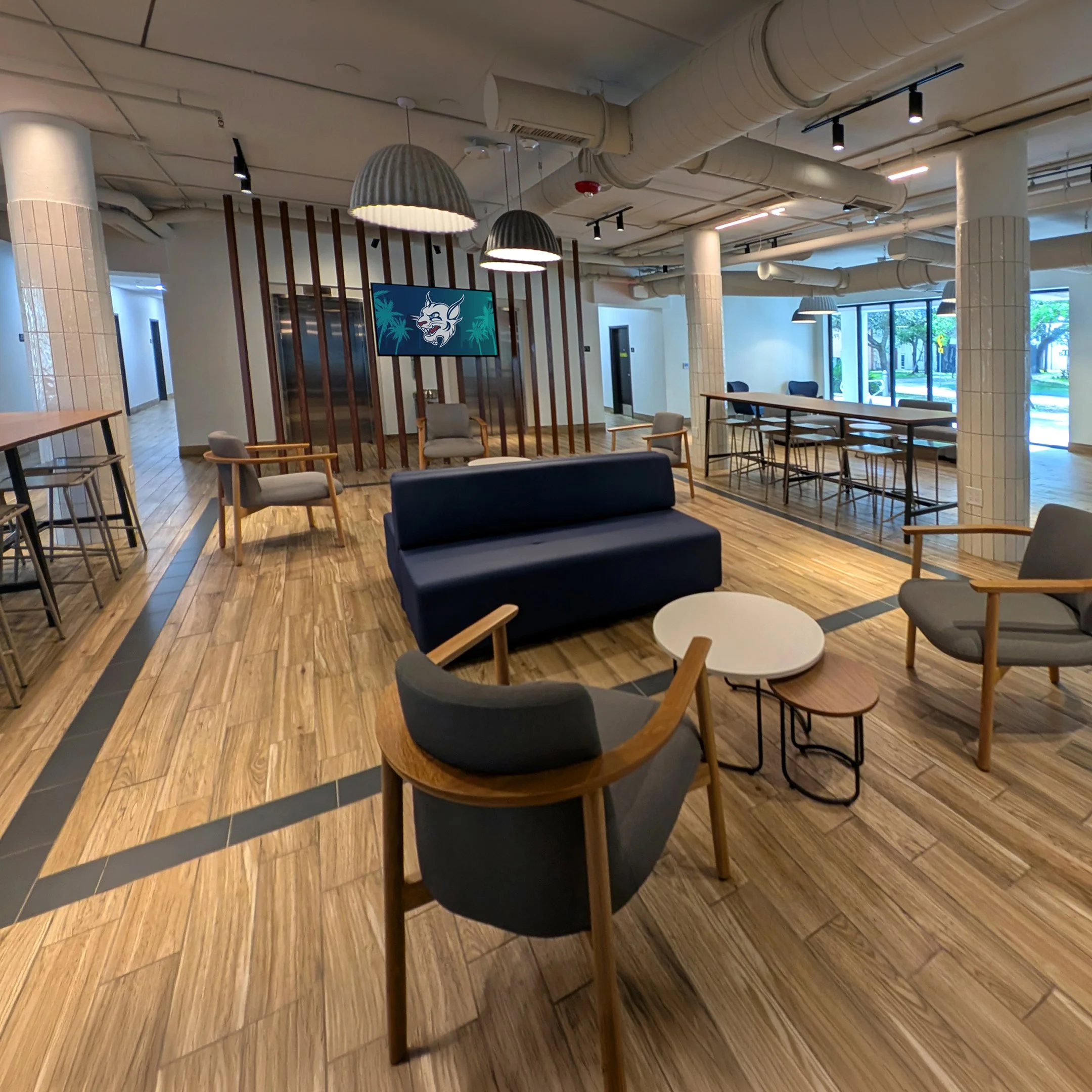
The interior is organized in a pod-style arrangement that balances privacy with community. Private dorm rooms and bathrooms are grouped into clusters anchored by shared living areas that serve as the social heart of each floor.
Common spaces are distributed throughout each wing to avoid long, repetitive corridors and to provide frequent opportunities for informal encounter. Smaller lounges and study nooks support individual focus and small-group collaboration, while encouraging spontaneous interaction.
At the center of each floor, a larger common living space with seating and entertainment functions as the “living room” of the floor community. These spaces are intentionally designed to draw students out of their rooms and into shared environments that foster belonging, peer interaction, and long-term student success.
Massing & Architectural Expression
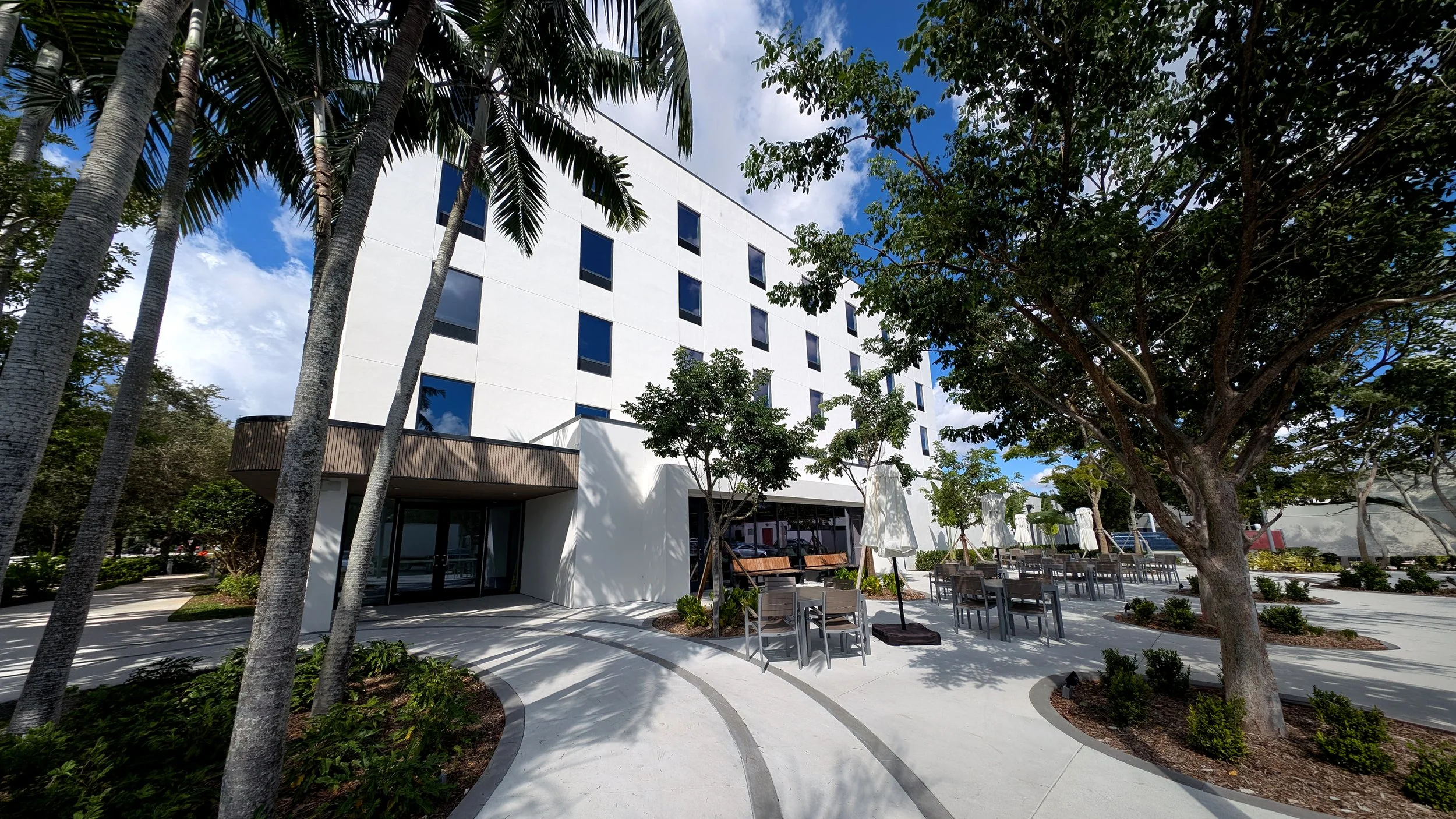
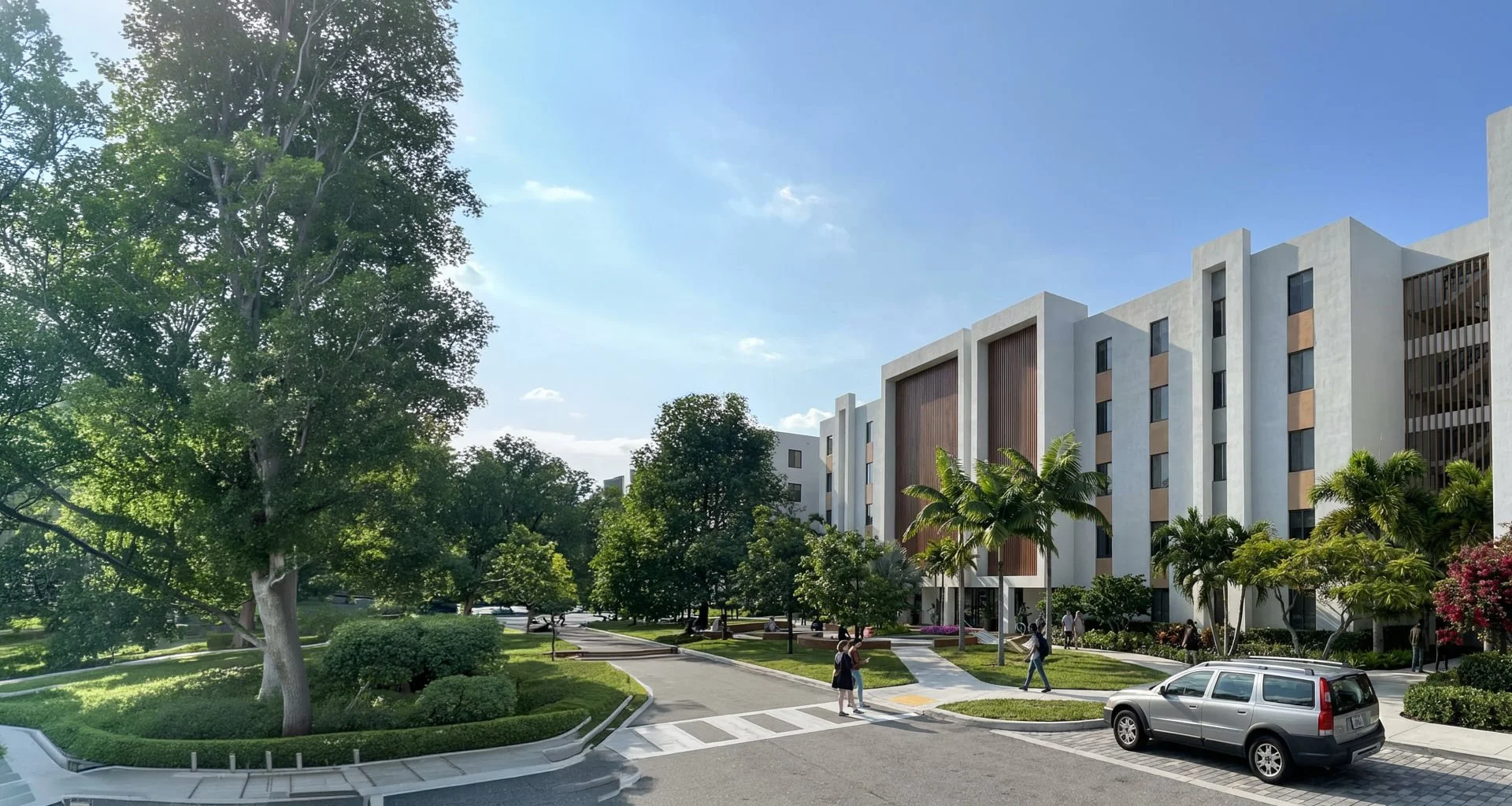
To mitigate the risk of scale associated with large residence halls, the building employs articulated massing and façade strategies that break down volume and communicate program. Compositional rhythm, depth, and shadow prevent monotony and create a dynamic presence throughout the day. Recessed volumes generate courtyard spaces that extend student life outdoors. Exterior stairs at the end of the courtyard sequence further blur the boundary between inside and outside. Designed to take advantage of Florida’s climate, these open-air stairs introduce daylight and breezes into circulation paths while reducing the sense of enclosure typical of large housing projects. Covered with sustainable recycled siding, the stair structures provide shade and visually connect to other contemporary campus buildings, reinforcing the evolving campus design language.
Climate-Responsive Design
The façade operates as a climate-responsive system. Every third window column is wrapped in a vertical sunshade device that identifies shared kitchen spaces while shielding units from direct sun exposure. This integrated shading reduces solar gain, lowers cooling loads, and enhances interior comfort without sacrificing views.
High-albedo white façade materials and roofing reflect solar radiation, reducing heat absorption and mitigating the urban heat island effect. Dark window tint further limits glare and heat gain, improving overall thermal performance.
Together, these strategies form a cohesive environmental response that enhances building performance while adding visual depth and rhythm to the exterior.
Outdoor Experience
Outdoor environments surrounding the building accommodate a range of activities. Courtyard niches offer quiet, sheltered spaces for small gatherings and individual study. Wider zones along the landscaped path support larger informal groups without disrupting circulation.
This layered approach to exterior space allows students to choose how they engage with campus life, supporting both solitude and community.
Project Impact
Housing Phase III strengthens campus identity while meeting multiple functional goals. It reinforces pedestrian frameworks, defines campus edges, and shapes meaningful outdoor spaces. It provides housing for more than 500 students in a model that balances autonomy with connection. It advances sustainability through climate-responsive façade systems and high-performance materials. And it establishes a new recreational anchor that enriches daily campus life.
The result is a cohesive, climate-conscious residence hall that feels active, legible, and deeply aligned with how students live, study, and connect.