Expanding Our Reach: MKC Architects Opens Boston Office to Strengthen National and Global Engagement
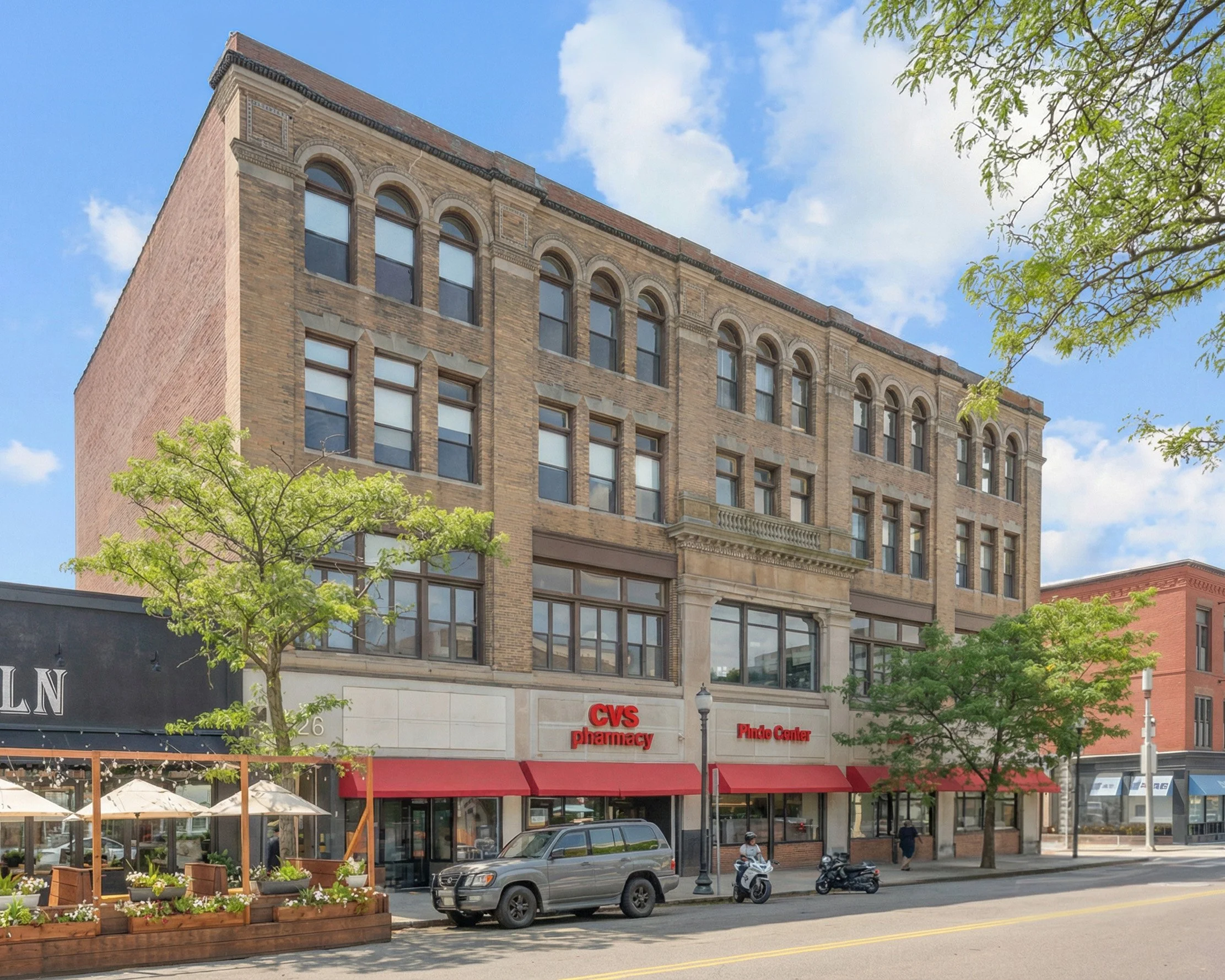

Architecture has always been shaped by place, and certain cities exert a gravitational pull on culture, institutions, and intellectual life in ways that extend far beyond their geographic boundaries. Boston is one of those cities. For MKC Architects, the opening of a Boston office represents far more than a simple geographic expansion or a symbolic milestone in the life of the firm. It is a strategic and deeply considered step that strengthens our ability to serve clients nationally and internationally while remaining grounded in the mission-driven institutional work that has defined our practice for more than a century. As MKC continues to grow, this new office creates a broader platform for engagement with universities, cultural institutions, faith-based organizations, and campus communities whose work increasingly extends across regions, networks, and even continents. At its core, the Boston office reflects our belief that architecture must respond not only to immediate functional needs, but also to larger intellectual, cultural, and institutional currents that shape how people learn, gather, worship, and live together over time.
For decades, MKC Architects has built its reputation on thoughtful, research-driven design in sectors that demand a high degree of care, complexity, and long-term vision. Our work in K–12 education, higher education, religious and spiritual environments, and student housing has always required more than technical proficiency alone. These are building types and institutional settings that ask architects to engage deeply with mission, identity, and human formation. A school is not merely a container for instruction. A campus is not simply an arrangement of facilities. A chapel or spiritual environment is not only a place of assembly. Each of these spaces participates in the shaping of experience, values, and community. The decision to open a Boston office emerges directly from this understanding. We recognized that the next phase of MKC’s growth would require a stronger presence within one of the nation’s most intellectually dynamic and institutionally rich environments, allowing us to extend our reach while deepening the quality of insight and engagement we bring to our clients.
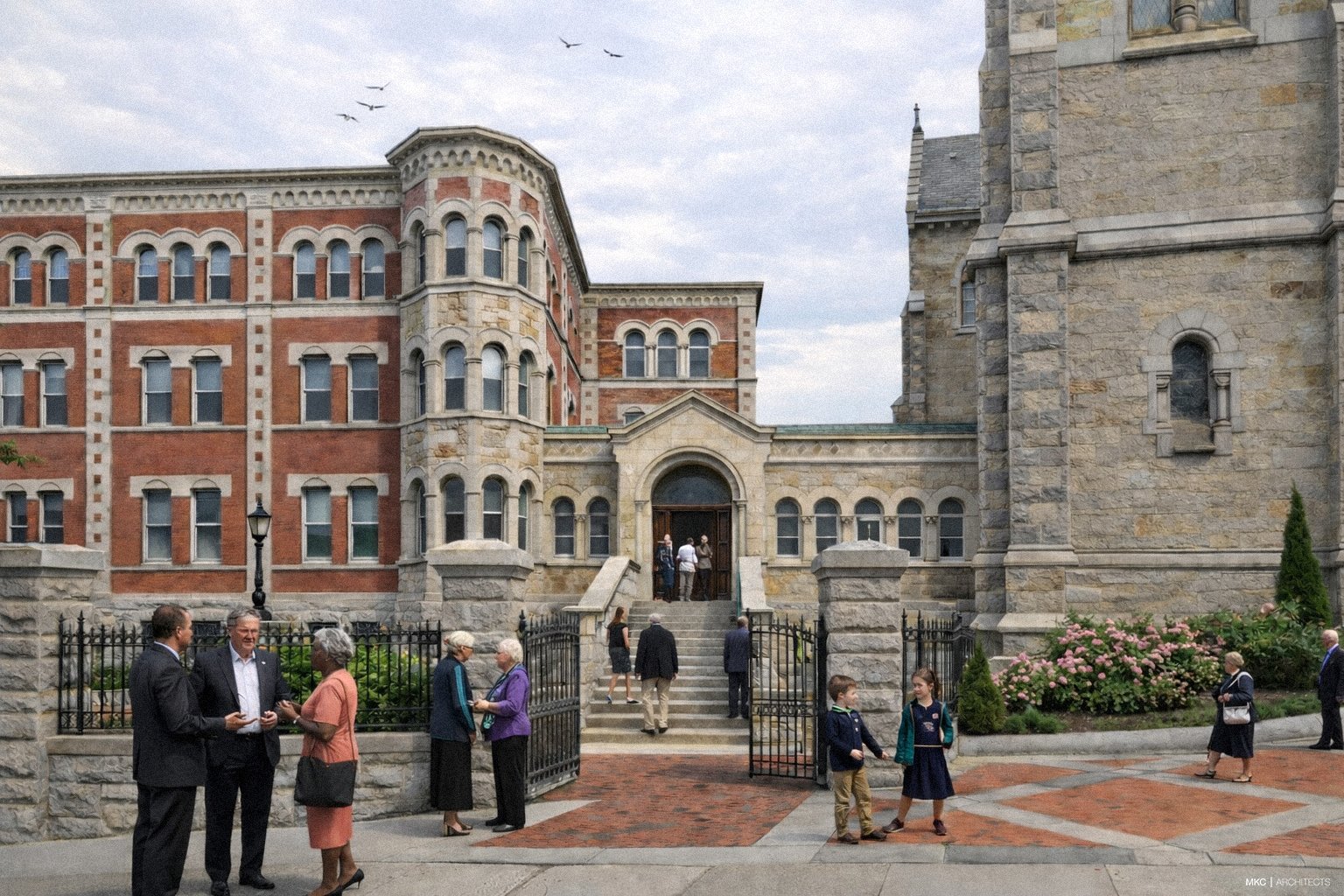
Mission Grammar - Boston. MA
Boston offers a uniquely fertile context for this expansion. Few cities in the world possess such a concentrated network of universities, research institutions, cultural organizations, and mission-driven enterprises. Within a relatively compact region, Boston and Cambridge contain an extraordinary density of academic life, including globally recognized institutions such as Harvard University, the Massachusetts Institute of Technology, Boston University, Northeastern University, and many others that collectively shape international discourse in education, science, urbanism, and the humanities. For an architecture firm whose work is so deeply tied to educational and institutional environments, proximity to this ecosystem matters. It places us in direct conversation with the ideas, challenges, and innovations that are redefining how learning environments are conceived. It allows us to better understand the evolving needs of institutions that are responding to technological change, new pedagogical models, demographic shifts, and the growing complexity of student life. Equally important, Boston is a city in which architectural history and contemporary invention coexist in a particularly vivid way. Its historic neighborhoods, civic landmarks, academic precincts, and modern interventions form a built environment that is constantly negotiating continuity and transformation. That dynamic resonates strongly with MKC’s own philosophy, which values both institutional memory and forward-looking design.
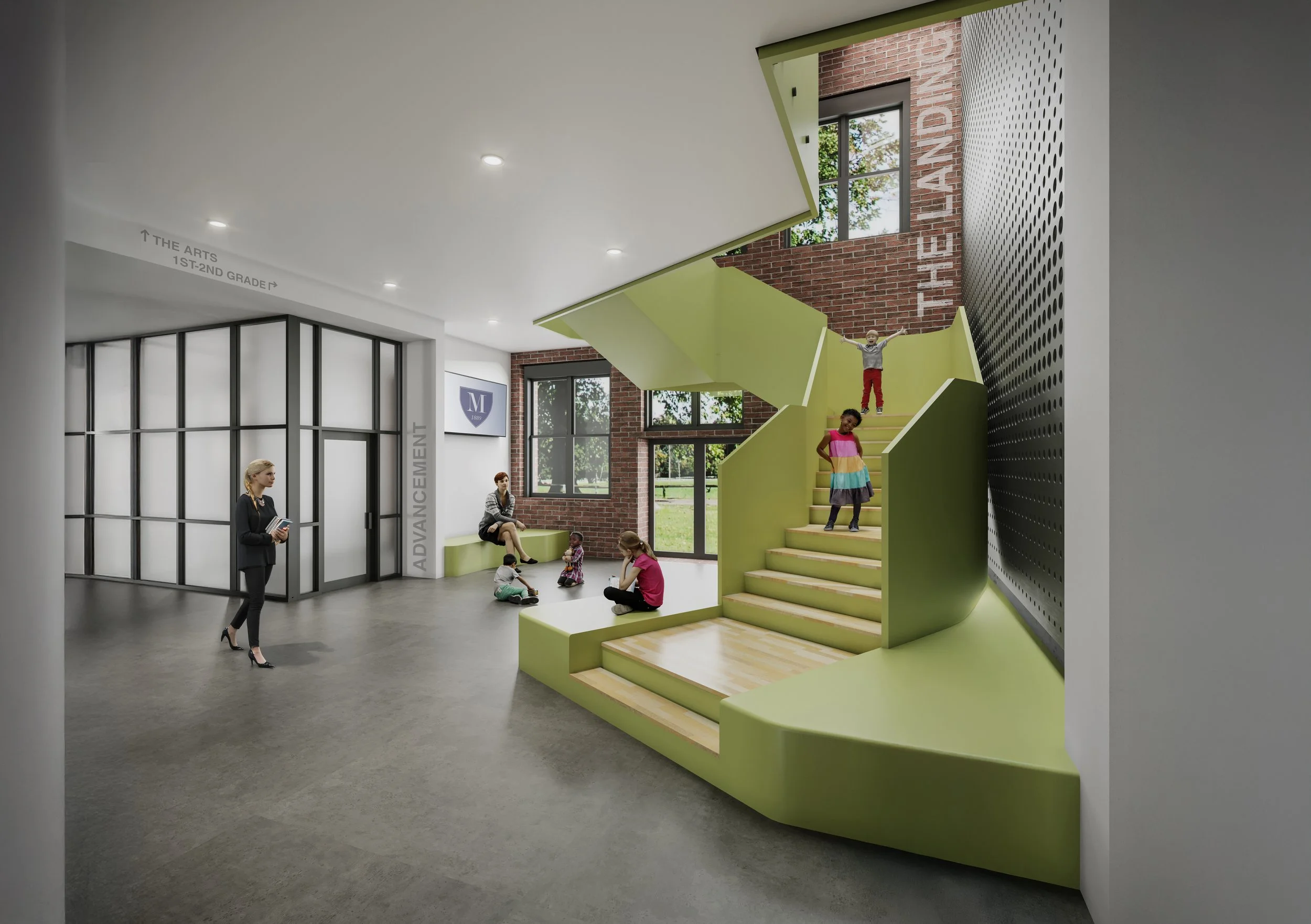
Landing
The opening of the Boston office therefore strengthens our service to clients not by changing who we are, but by extending the horizon within which we operate. MKC remains deeply committed to the sectors and values that have defined our work. What changes is our ability to engage more directly with institutions operating at broader scales and within more complex networks. Many of today’s schools, universities, and religious organizations no longer think solely in local or regional terms. Universities operate globally through partnerships, satellite programs, and international recruitment. Faith communities often participate in wider ecclesial or mission-based networks. Student housing and campus planning are increasingly shaped by national expectations, economic pressures, and changing cultural patterns. By establishing a Boston presence, MKC is better positioned to support clients whose aspirations, challenges, and constituencies extend beyond a single place. We can bring insights from one institutional context into another, connect regional experience to national discourse, and offer a broader field of awareness without losing the close, relationship-based approach that has always been central to our practice.
At the same time, the Boston office should not be understood as a departure from our longstanding foundation in Ohio, but rather as a complementary extension of it. Columbus remains the heart of the firm, the place where our institutional relationships were cultivated and where our culture of collaboration, inquiry, and service was formed over many decades. Our work throughout Ohio and the Midwest continues to be essential to who we are, and the opening of the Boston office reinforces rather than diminishes that identity. What emerges is a two-hub structure in which Columbus and Boston work together to create a more resilient and expansive platform for practice. Columbus provides continuity, depth of relationships, and the strong operational center from which so much of our work has grown. Boston adds proximity to a dense network of academic, cultural, and professional exchange, allowing the firm to participate more directly in conversations that shape the future of architecture and institutional life. Together, these offices enable MKC to be at once rooted and outward-looking, regionally grounded and nationally engaged.
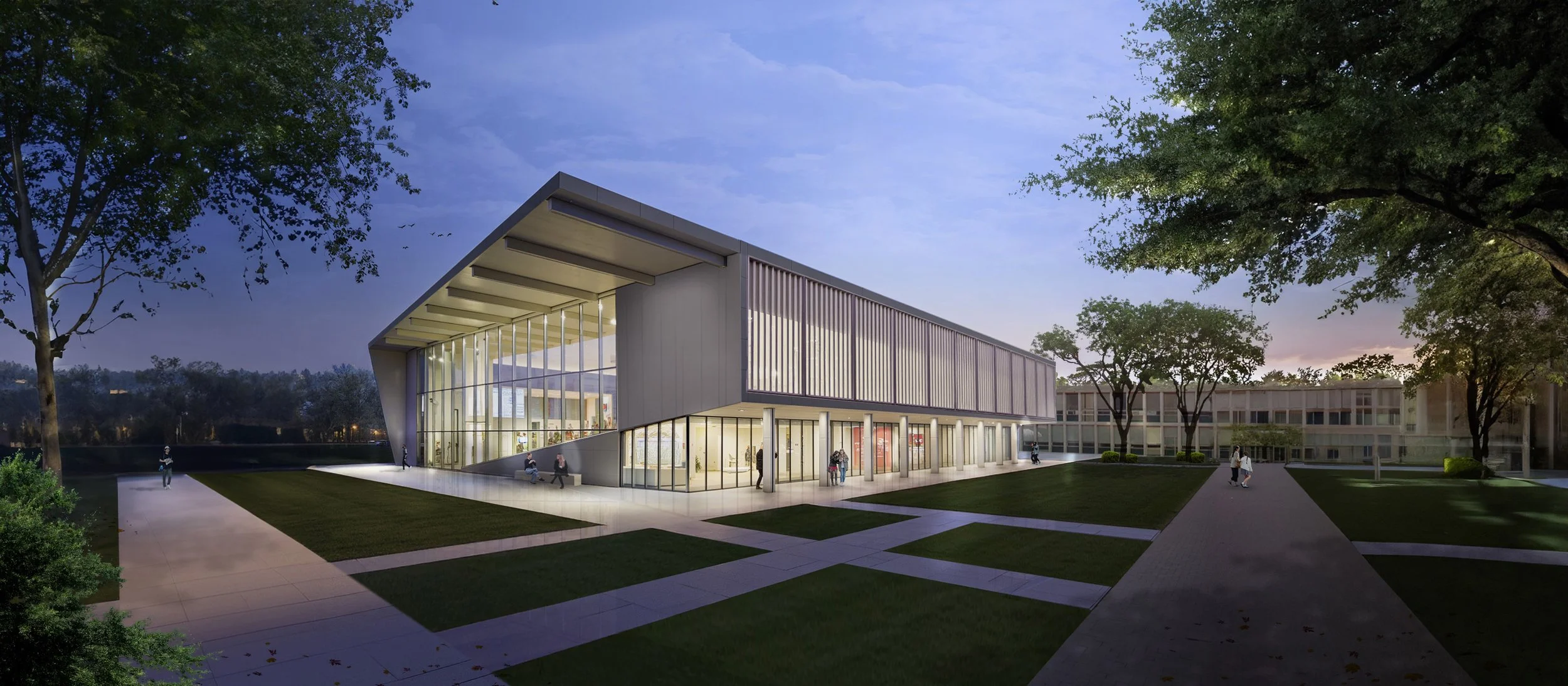
Science + Technology Center - Milton, MA
One of the most meaningful benefits of the Boston office lies in what it does for the internal culture of the firm. Architecture is not merely the production of buildings; it is also a way of thinking. It depends on a continuous exchange between practice and reflection, between technical problem-solving and deeper questions about space, community, and meaning.
Being present in Boston gives MKC greater access to an environment where those questions are actively explored at the highest levels. The city’s universities, design schools, lecture circuits, museums, and research communities create a setting in which architecture is constantly being examined in relation to broader questions of pedagogy, urbanism, technology, environment, and culture. For our teams, this offers opportunities for intellectual engagement that strengthen the rigor of our practice. It helps us remain attentive to emerging ideas and evolving institutional needs. It ensures that our work is informed not only by experience, but also by critical inquiry. This is not an abstract benefit. It has direct implications for the environments we design. Clients benefit when their architects are not only technically competent, but deeply immersed in the cultural and intellectual conditions that are reshaping the future of campuses, schools, and communal spaces
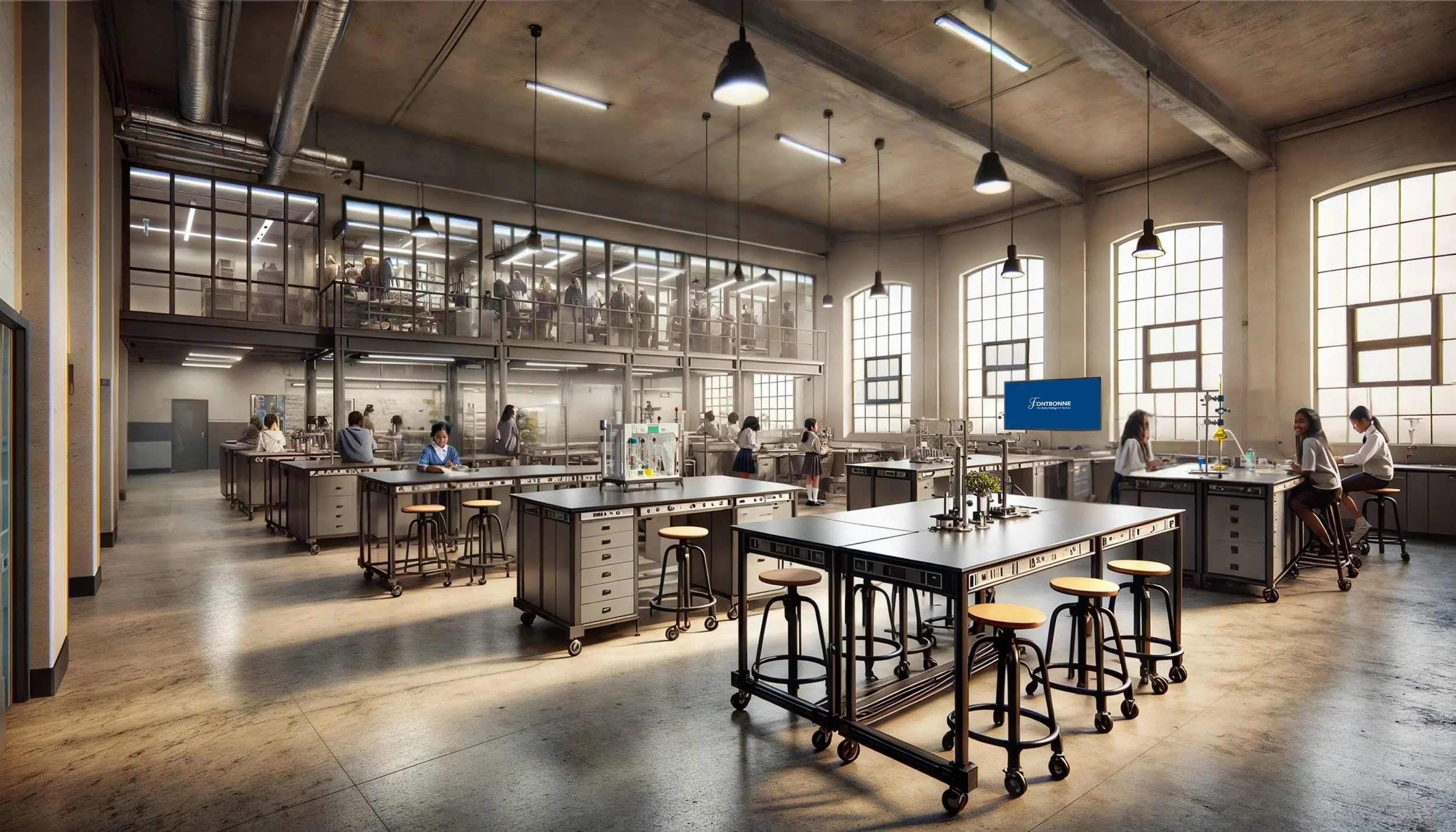
Center For Science
This expanded platform is especially important in the key sectors that define MKC’s work. In K–12 education, schools are being asked to support much more than traditional instruction. They must create environments that foster collaboration, adaptability, wellness, technological integration, and a sense of belonging, all while remaining grounded in mission and community identity. The Boston office places us closer to national conversations about pedagogy and educational innovation, allowing us to bring new insight to the planning and design of learning environments. In higher education, the pace of change is even more pronounced. Universities are rethinking not only classroom typologies, but also research spaces, student life, interdisciplinary engagement, and the broader relationship between campus and city. Being embedded in one of the world’s great academic centers gives MKC a unique vantage point from which to observe and contribute to these transformations. In religious and spiritual architecture, the benefits are equally significant. Faith communities are navigating changing patterns of participation, new forms of outreach, and renewed questions about the role of sacred space in contemporary life. MKC has long believed that such spaces must unite theological seriousness, experiential depth, and architectural beauty. A broader geographic and intellectual reach enhances our ability to support those communities with insight and sensitivity. Student housing, too, continues to evolve rapidly, as institutions increasingly recognize that residential environments play a decisive role in recruitment, retention, student wellbeing, and institutional identity. The Boston office strengthens our capacity to engage these questions at a higher level, bringing together operational understanding, design excellence, and a clear sense of how housing contributes to the larger life of the campus.
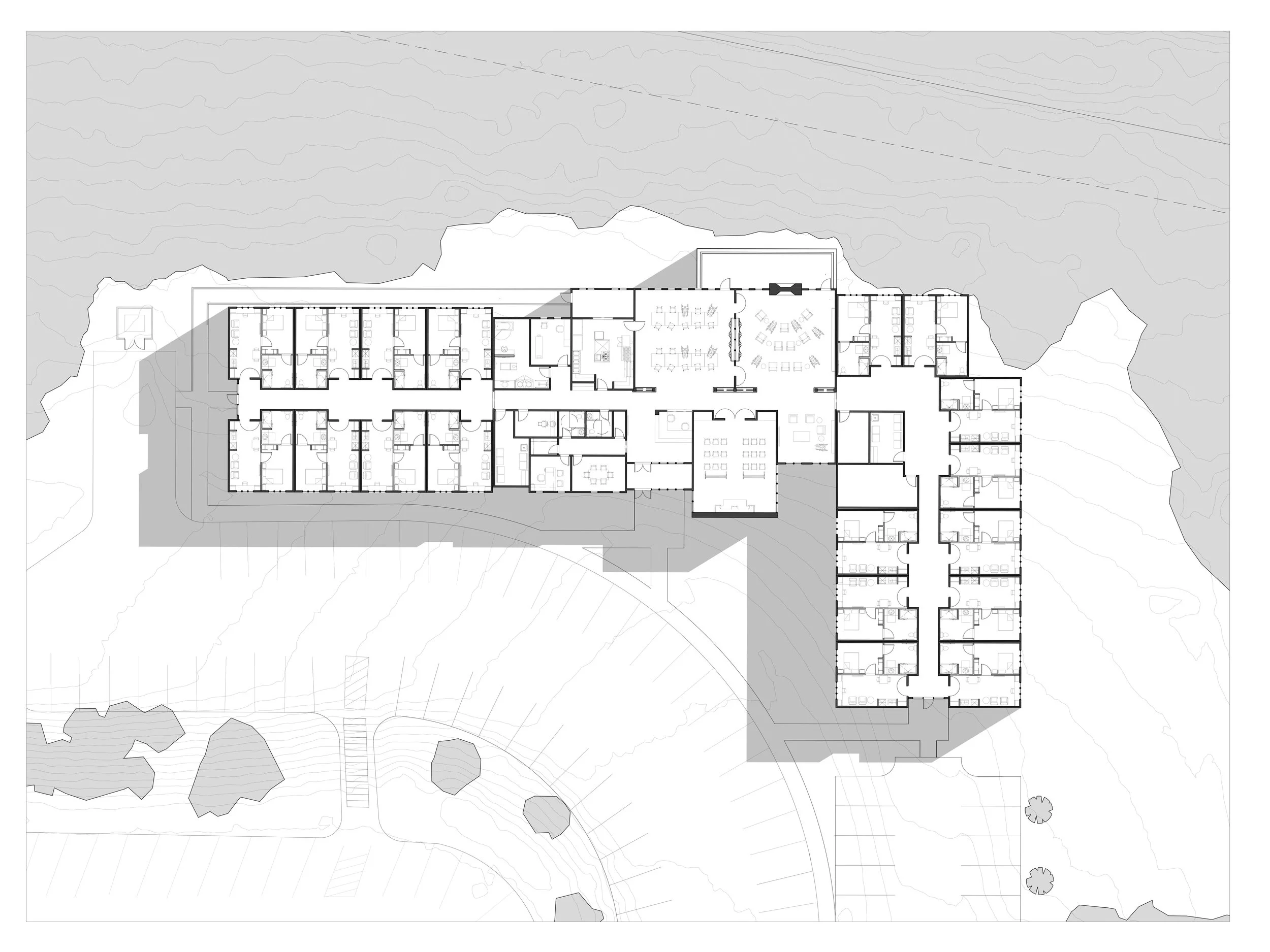
Catholic Memorial Nursing Home - Fall River, MA
The opening of the Boston office also represents an investment in people. Architecture is collaborative by nature, and the strength of a firm ultimately depends on the quality, ambition, and intellectual vitality of its teams. Boston offers access to a remarkable pool of talent, including architects, designers, planners, and thinkers who are drawn to the city’s energy and its deep connections to academic and cultural life. Establishing a presence there enhances MKC’s ability to attract and retain exceptional professionals while also creating new opportunities for cross-disciplinary engagement and long-term growth within the firm. It broadens the environments in which our people can work, think, and develop. It supports a richer exchange of ideas across offices and disciplines. And it reinforces the culture of curiosity and excellence that has long distinguished MKC’s approach to practice. This matters not only internally, but externally as well. Clients feel the effects of a strong design culture. They experience it in the quality of questions we ask, the thoughtfulness of our planning, the clarity of our design vision, and the depth of commitment we bring to each project.
Ultimately, the opening of our Boston office marks an important moment in the ongoing evolution of MKC Architects, but it is best understood not as a break from our past, but as a continuation of the principles that have guided us for generations. It reflects our belief that architecture must be thoughtful, mission-driven, and intellectually serious. It reflects our commitment to long-term institutional relationships and to environments that support learning, worship, community, and human flourishing. And it reflects our recognition that the future of architecture will belong to firms capable of operating at multiple scales at once: locally attentive, institutionally grounded, and globally aware. From Columbus to Boston and beyond, MKC Architects remains dedicated to creating places of enduring value, places shaped not only by technical skill, but by a deep understanding of how architecture participates in the life of institutions and the formation of communities. The Boston office simply gives us a broader and more dynamic platform from which to pursue that mission.