Church of Resurrection
Church of Resurrection Parish Center
Location: Solon, Ohio
Completion Date:
Project Size:
Project Overview
In recognition of its 50th Anniversary, the Church of the Resurrection in Solon, Ohio, undertook a renovation and expansion of its parish center to better support the evolving needs of its congregation. MKC Architects was engaged to transform the existing mid-century structure into a contemporary gathering environment that strengthens connections between worship, community, and daily parish life.
The design builds on the character of the original building while introducing a more open and outward-facing presence. New interventions prioritize transparency, flexibility, and material continuity, creating a cohesive architectural language that aligns with both the existing church and the broader campus.
At its core, the project repositions the parish center as a visible and active hub for the community, organized around a central gathering space that supports a wide range of uses while maintaining a strong sense of identity and place.
From Legacy to Renewal
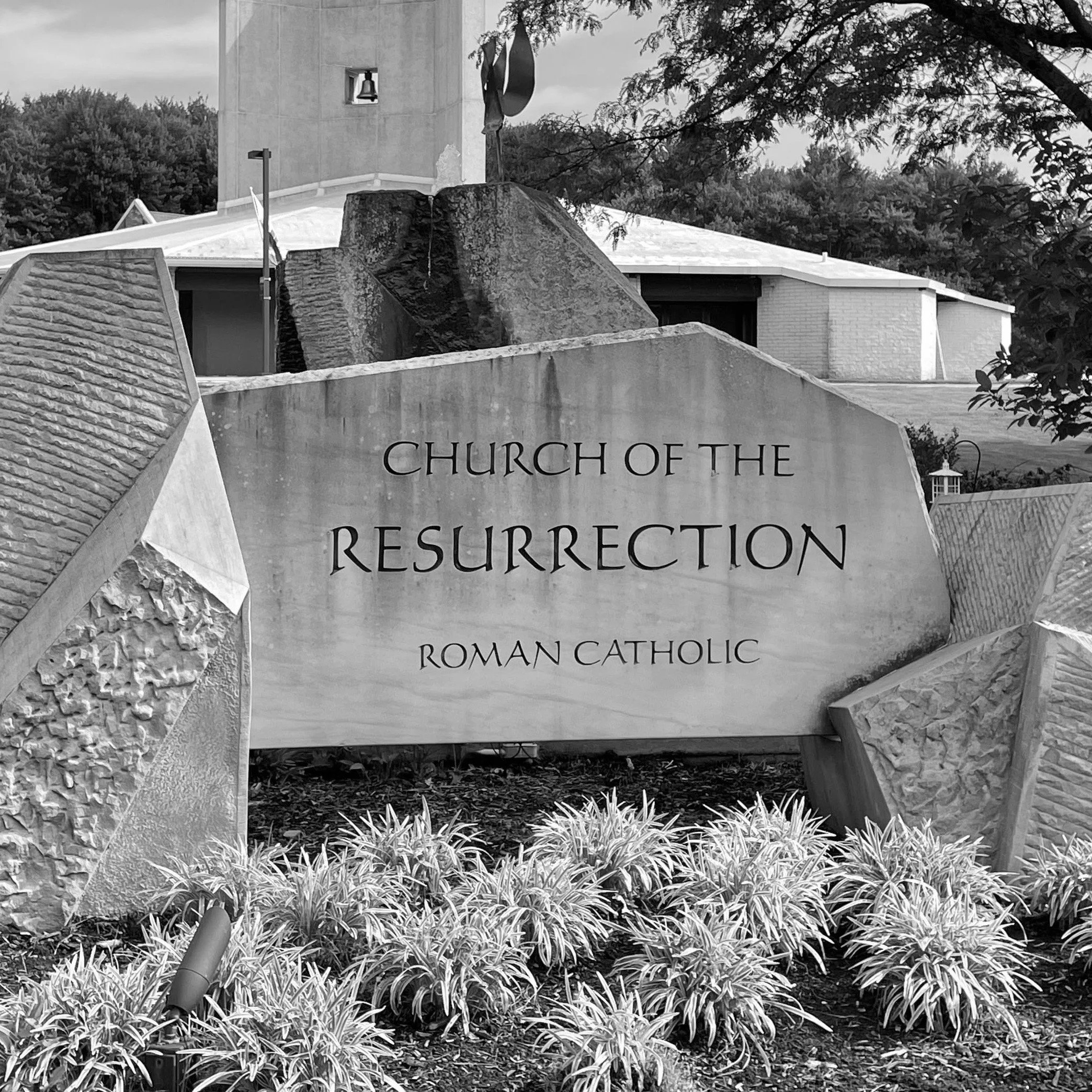
The original parish center, rooted in mid-century ecclesiastical design, served the congregation for decades. Its low horizontal profile, white masonry, and distinctive concrete bell tower reflected the architectural language of its time. Over time, the building’s limitations became clear. The inward-facing façade limited engagement with the surrounding community, and interior spaces lacked the flexibility required for contemporary parish life. The design approach focused on stewardship. Meaningful elements of the original structure were retained, while targeted interventions introduced new spatial clarity, improved circulation, and a stronger relationship to the site.
A New Face Toward the Community
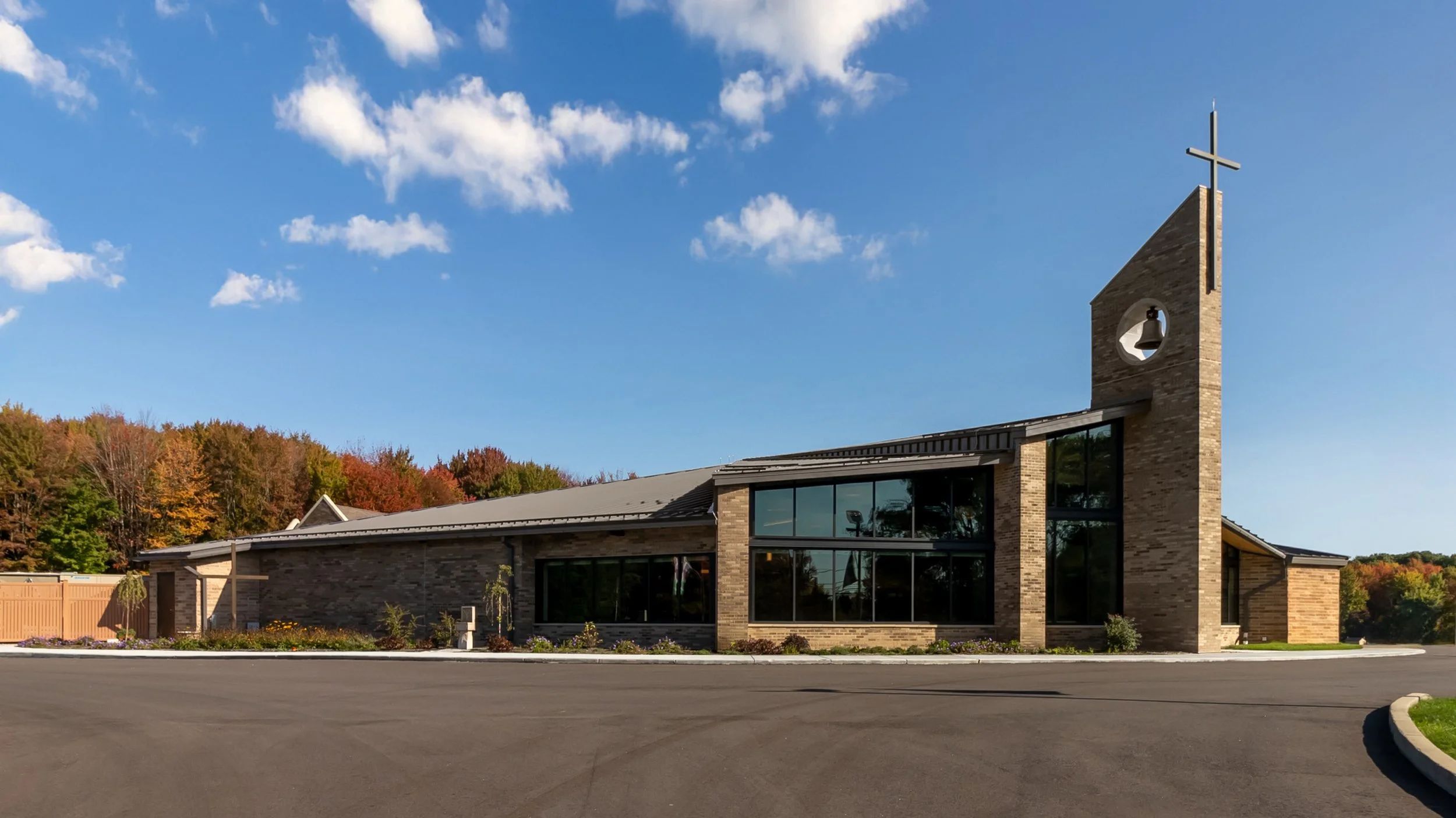
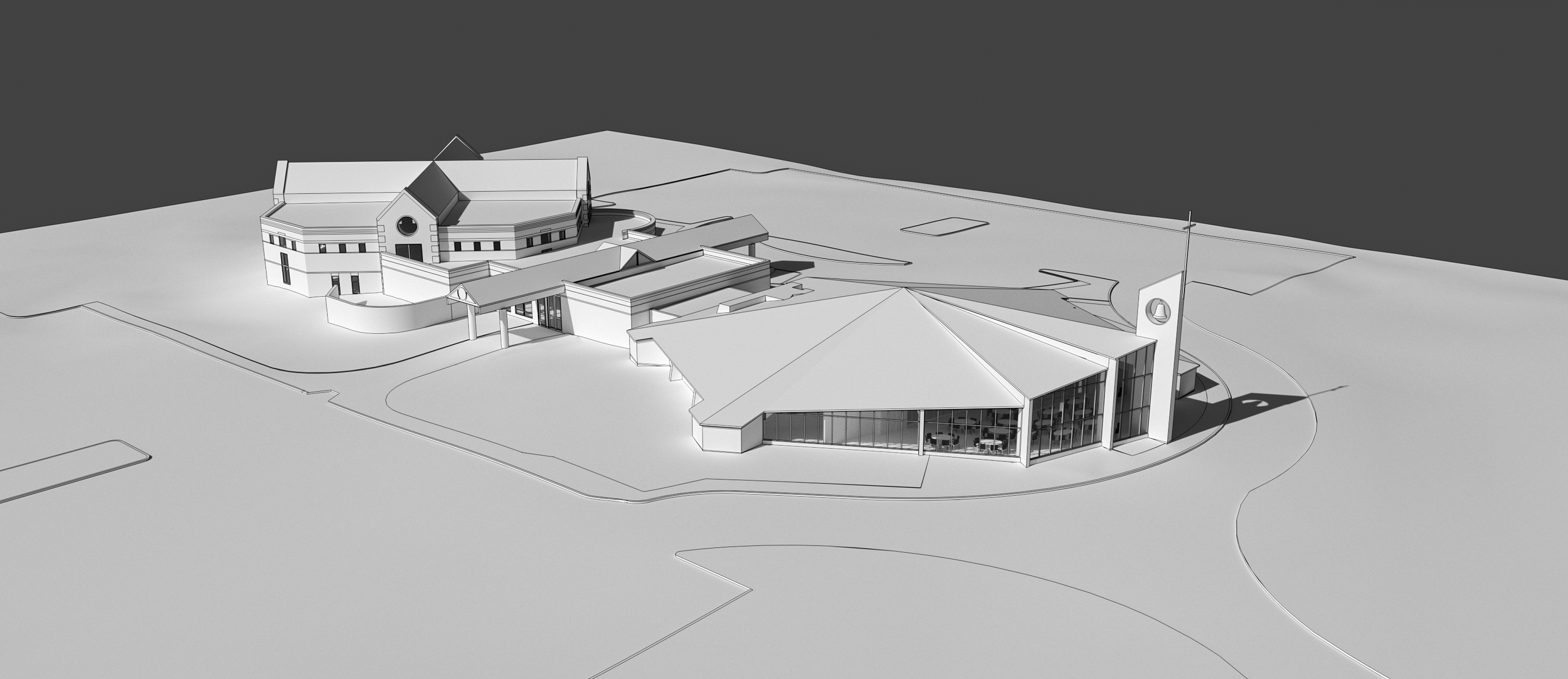
The most visible transformation occurs on the street. Where the original building was largely opaque, the new design opens outward through an expansive glazed façade. Floor-
to-ceiling curtainwall introduces daylight deep into the interior and establishes a clear visual connection between the parish center and the surrounding landscape.
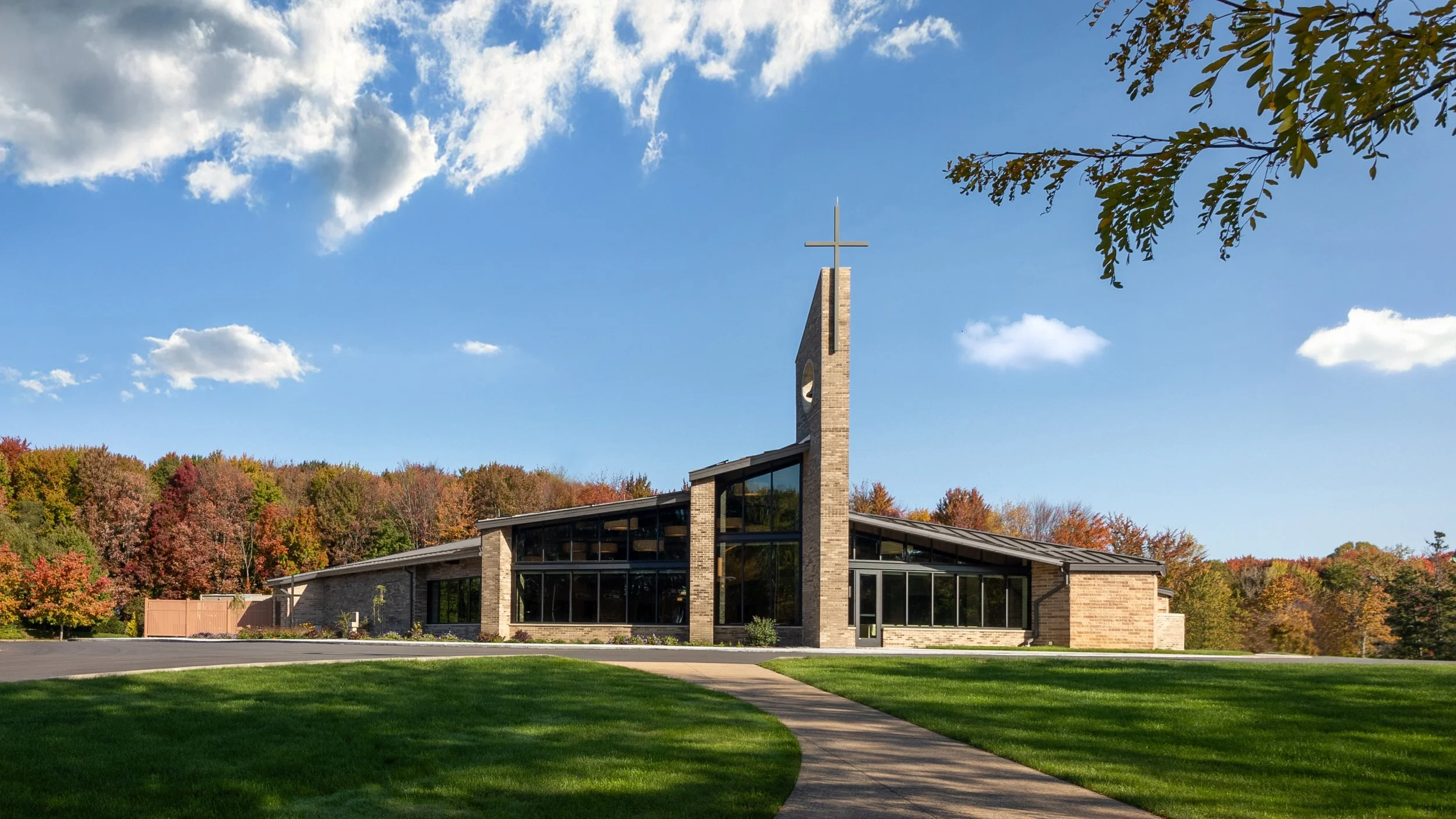
A new bell tower anchors this composition. Clad in brick and stone and crowned with a cross, it introduces vertical presence and reinforces the building’s identity within the campus. The relationship between the transparent gathering spaces and the grounded masonry tower establishes a balance between openness and permanence.
Material Language and Architectural Character
The material palette draws from both context and tradition. Brick aligns the addition with the existing church, creating continuity across the campus, while dark bronze metal detailing introduces a refined contemporary layer. A standing seam metal roof unifies the building form, providing a consistent architectural expression across new and existing elements.
Site improvements extend the architectural intent outward. Updated entry sequences, curvilinear drives, and integrated landscape elements create a more deliberate approach to the building, shaping a clear and welcoming point of arrival.
The Heart of the Parish, the Central Hall
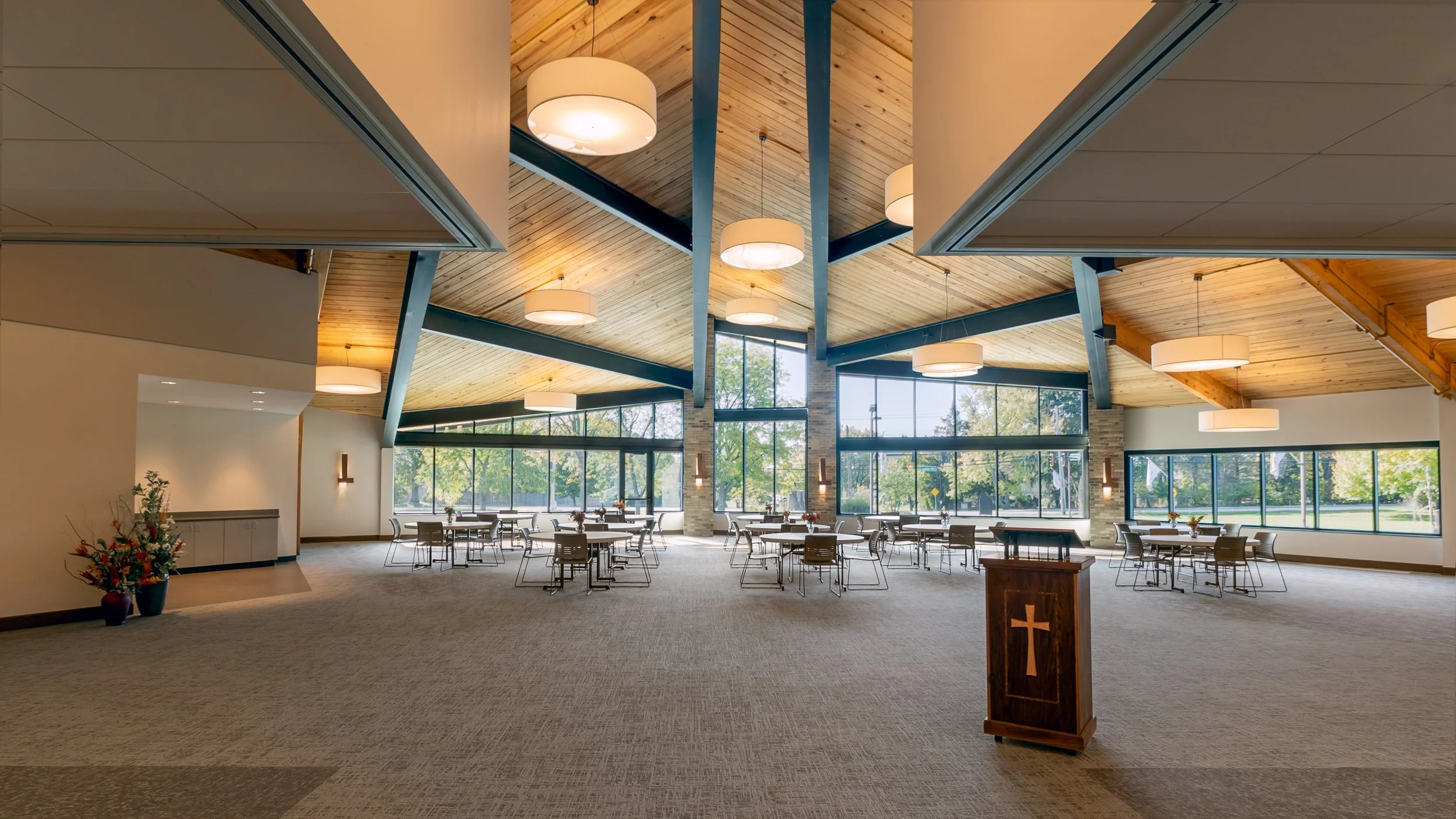
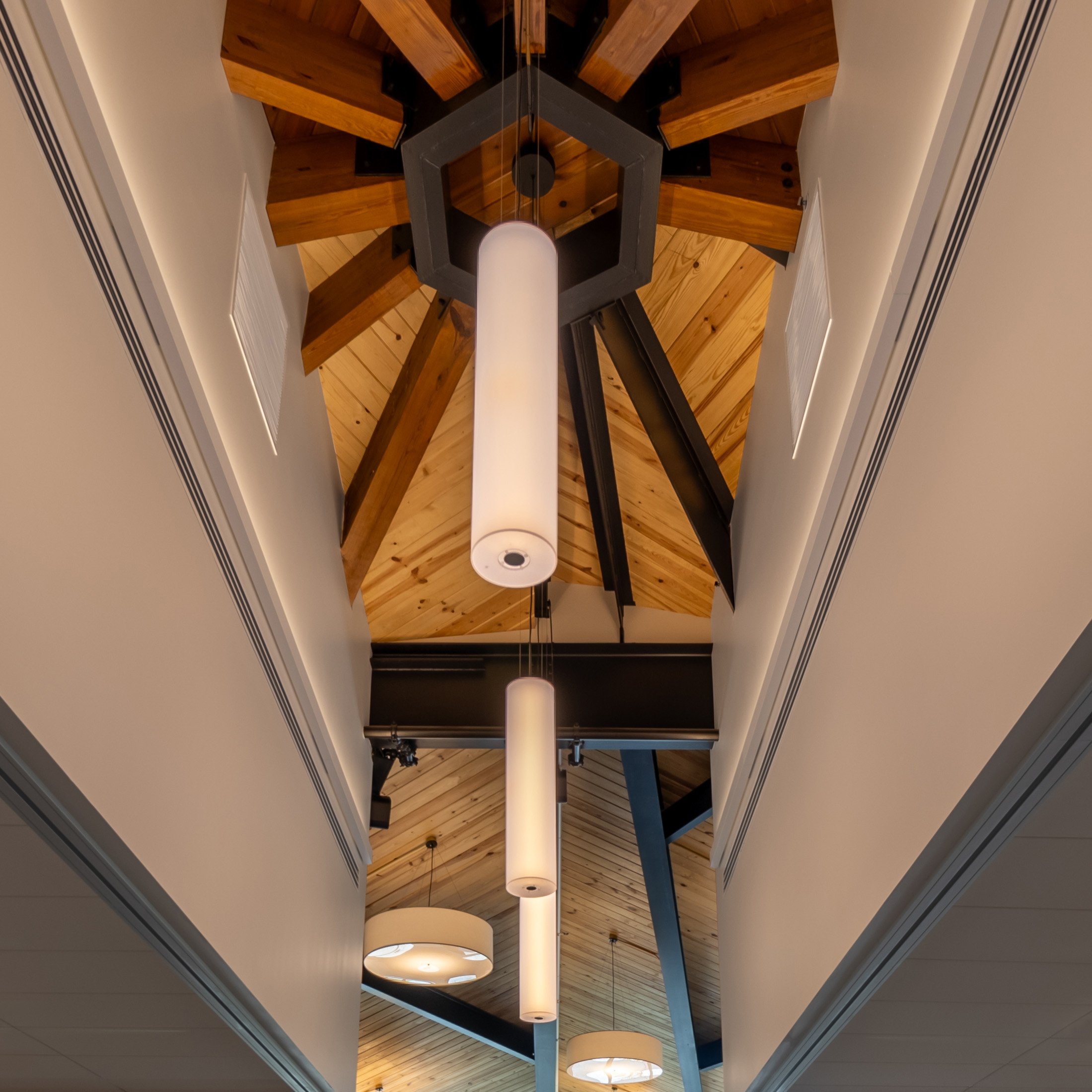
At the center of the project is a flexible gathering hall that serves as the primary organizing space of the parish center. Designed to accommodate a wide range of functions, the hall supports both large-scale events and smaller community gatherings within a single cohesive volume. A timber roof structure defines the space, rising to create a strong sense of height and focus. Exposed wood framing and exposed connections introduce warmth and material clarity, while a central lighting feature reinforces the room's vertical axis. Daylight enters from multiple orientations through clerestory and full-height glazing, connecting the interior environment to the surrounding landscape and creating a consistently bright and welcoming space.
Flexibility, Fellowship, and Function
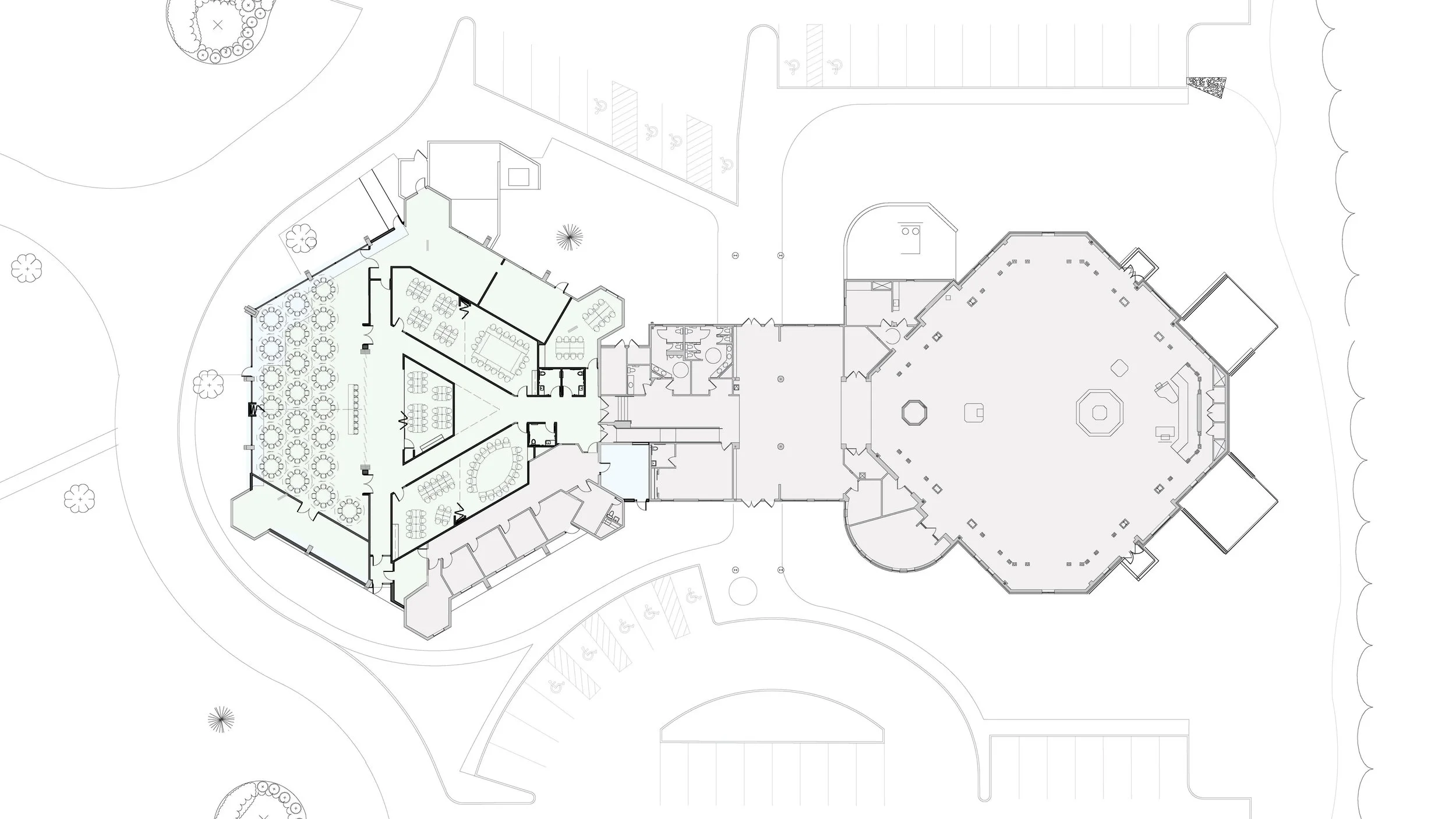
The interior layout prioritizes adaptability. A column-free floor plate allows for multiple configurations, supporting dining, educational programming, and community events.
Furnishings are lightweight and easily reconfigured, allowing the space to respond to changing needs over time. A movable lectern provides a flexible focal point, supporting the space's spiritual function without prescribing a single use. Supporting program elements are organized to allow the hall to function independently or in conjunction with adjacent spaces, improving operational efficiency while maintaining spatial clarity. Light is a primary driver of the interior experience. Natural light shifts throughout the day, while integrated lighting provides a consistent presence in the evening. Together, these layers create an environment that supports both gathering and reflection. Material selections reinforce this atmosphere. Wood, stone, and neutral finishes establish a sense of warmth and durability, contributing to an interior that feels grounded, comfortable, and appropriate for a wide range of uses.
A Catalyst for Community and Faith
The renovated parish center repositions the building as an active extension of the church’s mission. By opening toward the street, organizing the program around a central gathering space, and reinforcing material connections to the existing campus, the design supports both daily use and long-term growth.
The result is a parish center that serves as a visible and accessible hub for the community, designed to support the congregation's evolving needs while maintaining a strong architectural identity.