The Cyclical City
The Cyclical City
Presented at RIXARCH Latvia
Using Post Industrial Vacancy to Solve Food Insecurity
Post-Industrial Vacancy as a Food Infrastructure Problem
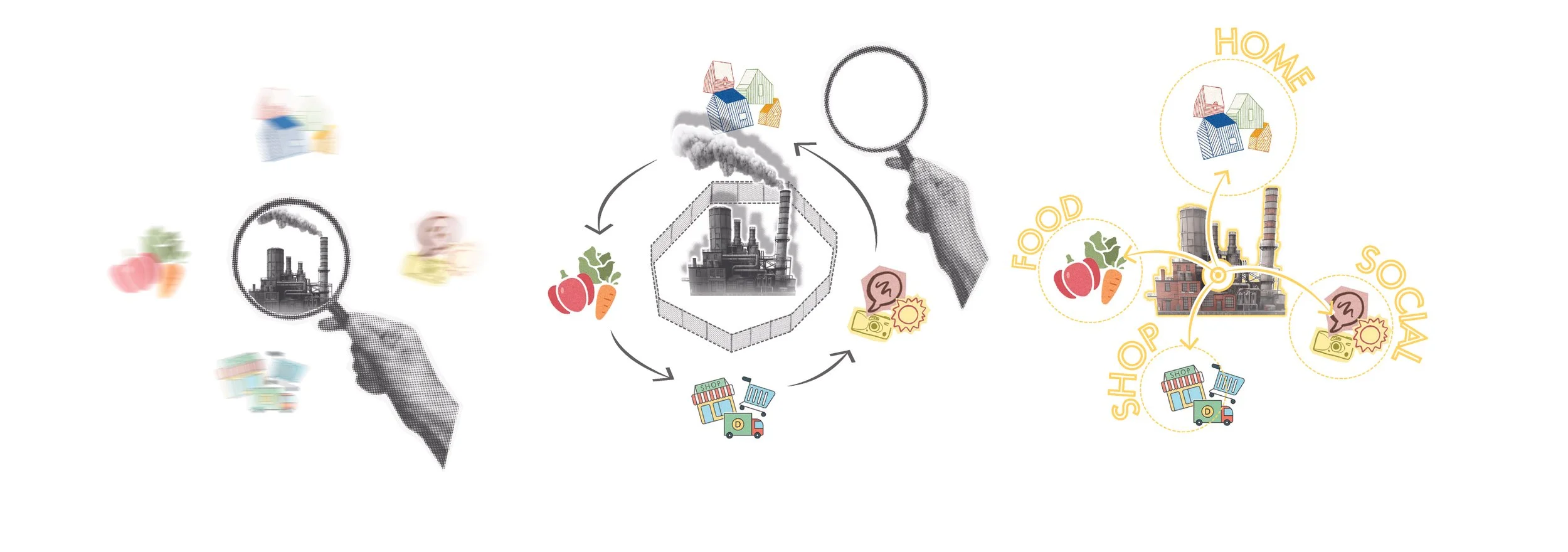
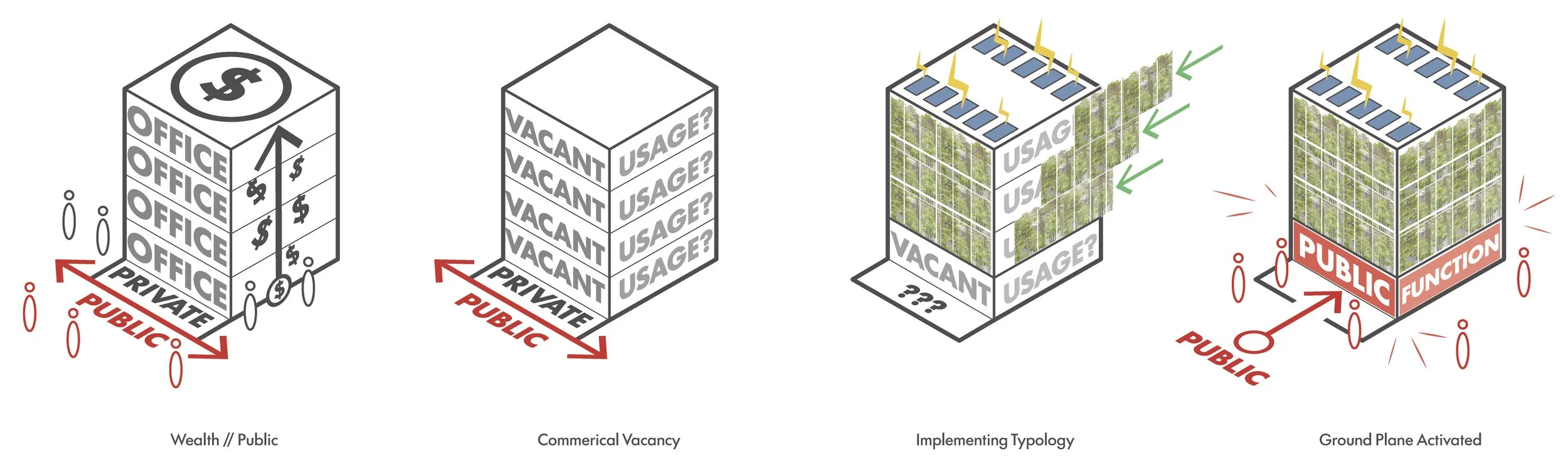
Picture a neighborhood where an abandoned, rusted-out factory sits just down the street from families who cannot find a single fresh apple or head of lettuce at a local store. This is the reality of the post-industrial urban fabric in many American Rust Belt cities. We are facing a strange spatial paradox where a massive surplus of vacant commercial space exists alongside an acute deficit in food access.
In the United States, over one billion square feet of underutilized commercial space and between 450,000 and one million brownfield sites now define our cities. Decades of disinvestment have trapped these areas in cycles of urban poverty, resulting in modern food deserts.
But what if these empty structures are not just symbols of decay? What if they are actually the foundation for a healthier future?
A framework called The Cyclical City, proposes that we stop looking at urban vacancy as a disease. Instead, we can treat it as a living infrastructure to systematically address food insecurity at the neighborhood scale.
Why Single Farms Fail
Urban farming is not a new concept, but history shows that lone operations struggle to survive on their own. Take FarmedHere in Chicago, which was once the nation's largest indoor farm. Despite a 23 million dollar investment and a massive 90,000-square-foot facility, it closed down because of heavy operational costs and intense market competition.
The lesson here is clear. Isolated indoor farming operations lack the resilience to compete alone against traditional agricultural markets.
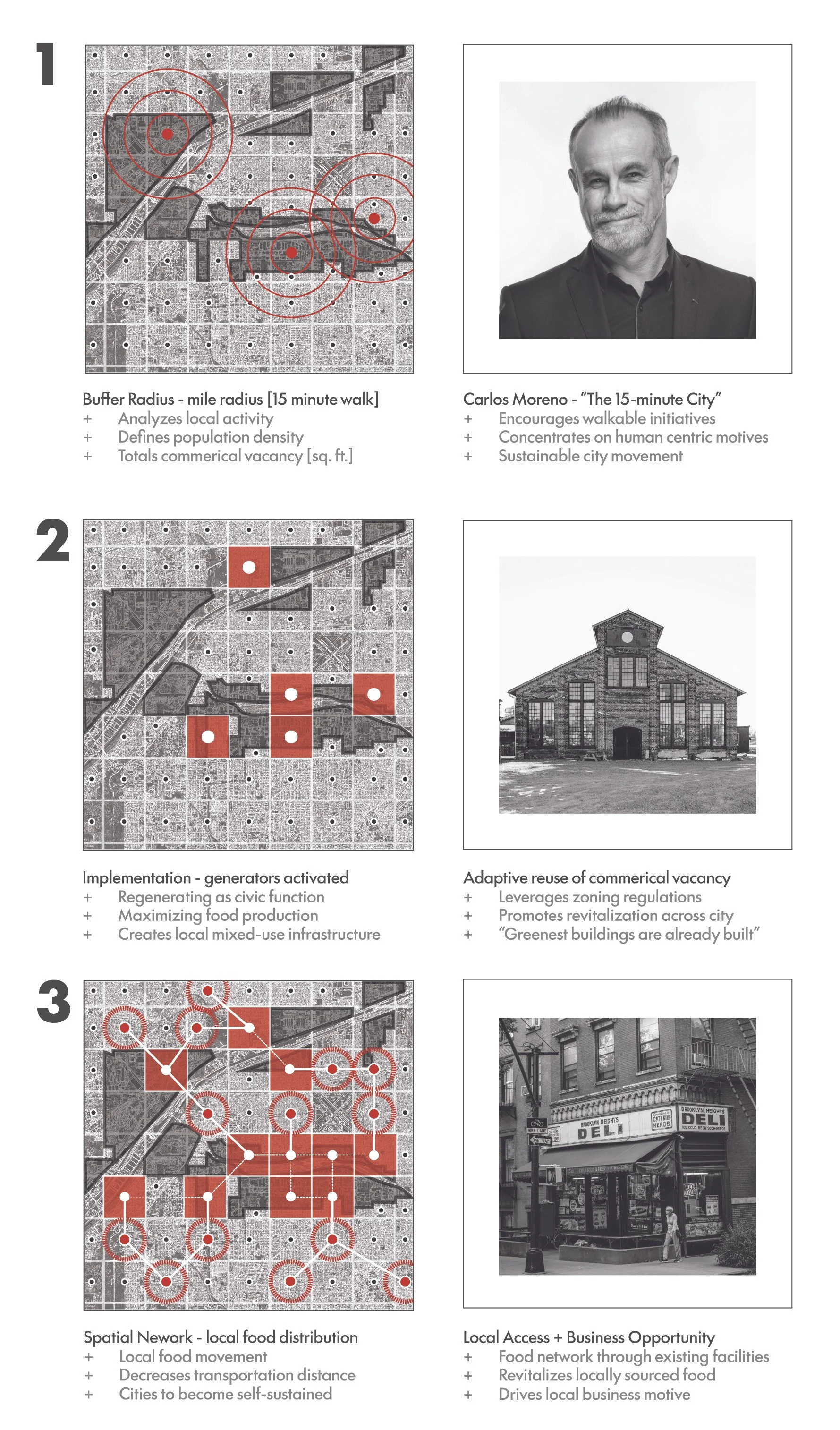
The Cyclical City framework solves this problem through aggregation. Instead of building one massive mega-farm, it uses spatial analysis to map out clusters of vacant parcels within a one-mile radius. This distance closely matches Carlos Moreno's 15-Minute City framework, which is the distance a resident can easily cover on foot, by transit, or by a short drive in a localized area. By linking multiple smaller sites into a coordinated network, the system builds economic strength and secures food access across entire communities.
Typology Logic: Matching the Solution to the Space
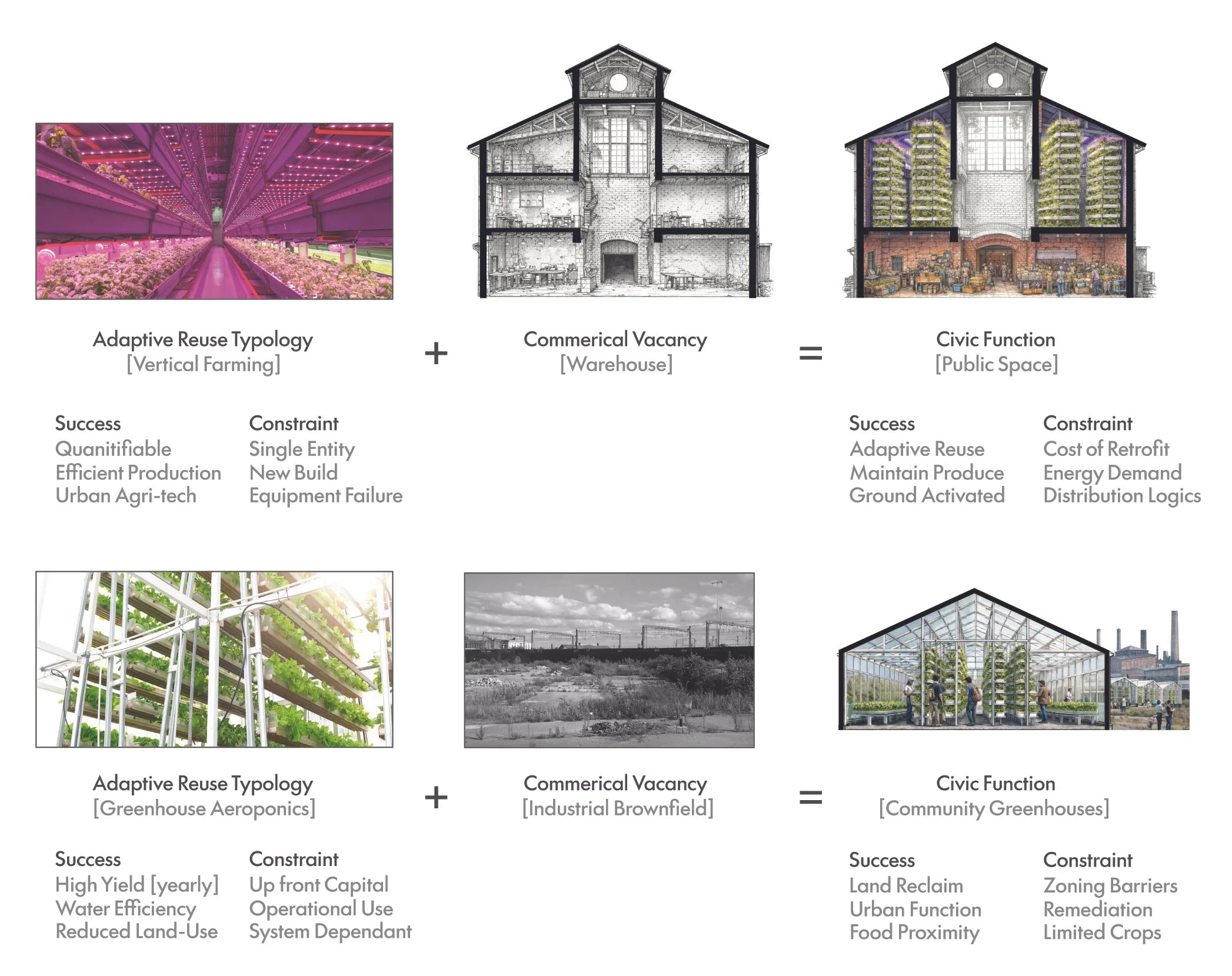
Not all vacant properties are the same. The framework looks at the specific constraints of a space and matches it with the right agricultural technology:
Vertical Farming in Vacant Commercial Buildings: Enclosed spaces like old industrial warehouses and factory buildings offer the structural depth and high ceilings needed for indoor agriculture. By using stacked trays, LED lights, and aeroponic mist, operations like AeroFarms can achieve yields up to 390 times greater per square foot than traditional farming while using 95% less water. Plus, reusing an existing building saves 50% to 75% of the embodied carbon emissions generated by building something brand new.
Greenhouse Hydroponics on Brownfield Sites: Defunct industrial lots often suffer from severe soil contamination from heavy metals or petroleum. This makes traditional ground planting highly dangerous or requires decades of slow bioremediation. Greenhouse hydroponics solves this by taking soil out of the equation completely. Plants are grown in nutrient-rich water solutions right on top of the lot. While it offers less yield density than a vertical farm, it requires much less structural investment and capitalizes on natural daylight.
““The post-industrial condition of American Rust Belt cities has produced a spatial paradox: vast surpluses of vacant commercial space coexist alongside acute deficits in food access.”
”
Three Cities, Three Vacancy Logics
To prove this model can work anywhere, the framework stress-tested its logic across three unique Rust Belt landscapes. Each city presents an entirely different spin on vacancy.
Chicago
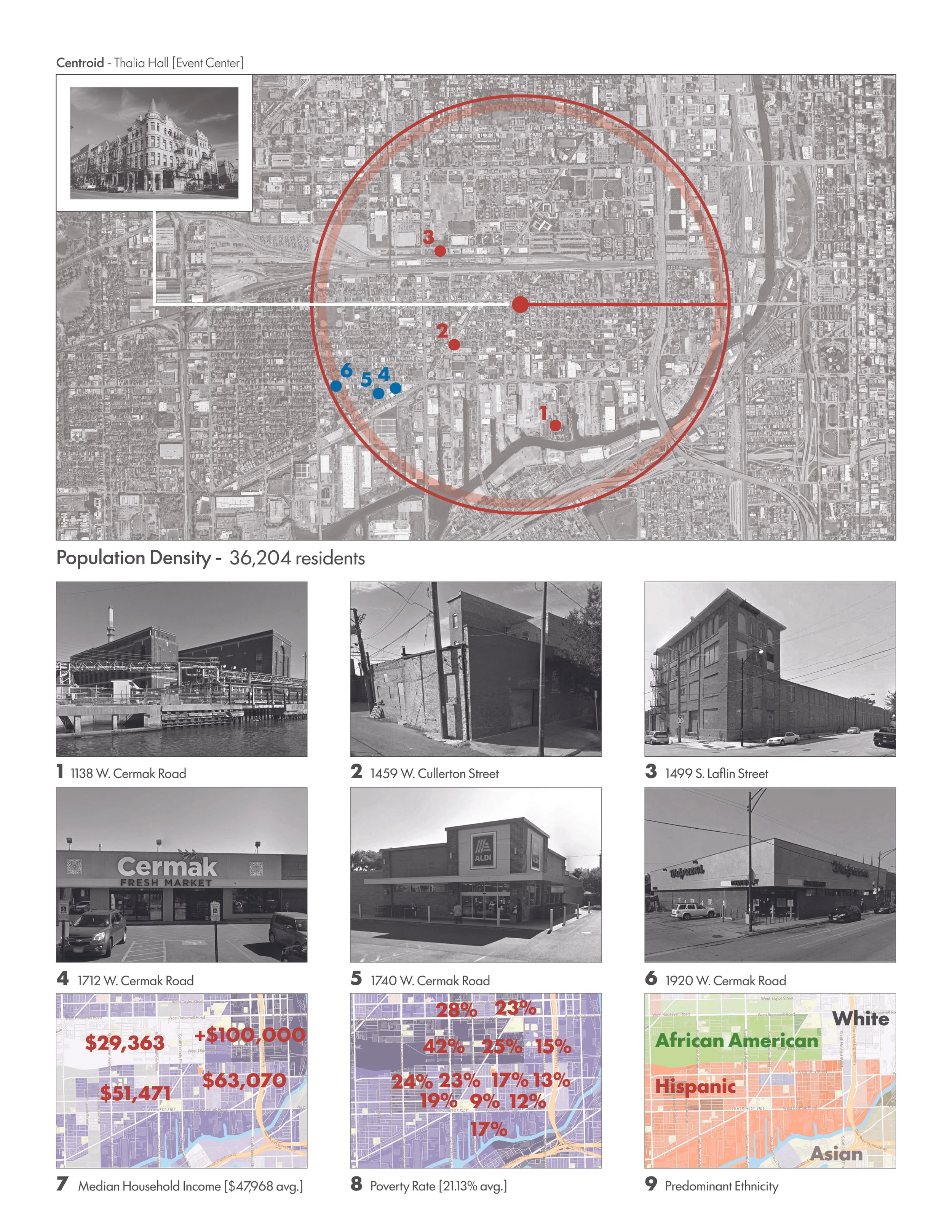
Chicago is a city of massive scale anchored by historical railway infrastructure and riverfront manufacturing hubs. Deindustrialization here left behind deep wage inequality and left nearly one million residents on the South and West Sides without consistent access to healthy food.
The major roadblock in Chicago stems from its historical 1923 Zoning Ordinance, which rigidly separated manufacturing districts from residential and commercial areas. When factories closed, these corridors stayed legally frozen. This preserved land-use rules but left the neighborhoods economically hollow.
To fix this, the model activates a tool already hidden in the municipal code called the 2011 Urban Agriculture Zoning Code Amendment. Because this rule explicitly allows indoor farming and hydroponics within select manufacturing zones, the framework can move forward immediately without needing a massive rezoning battle.
Pittsburgh
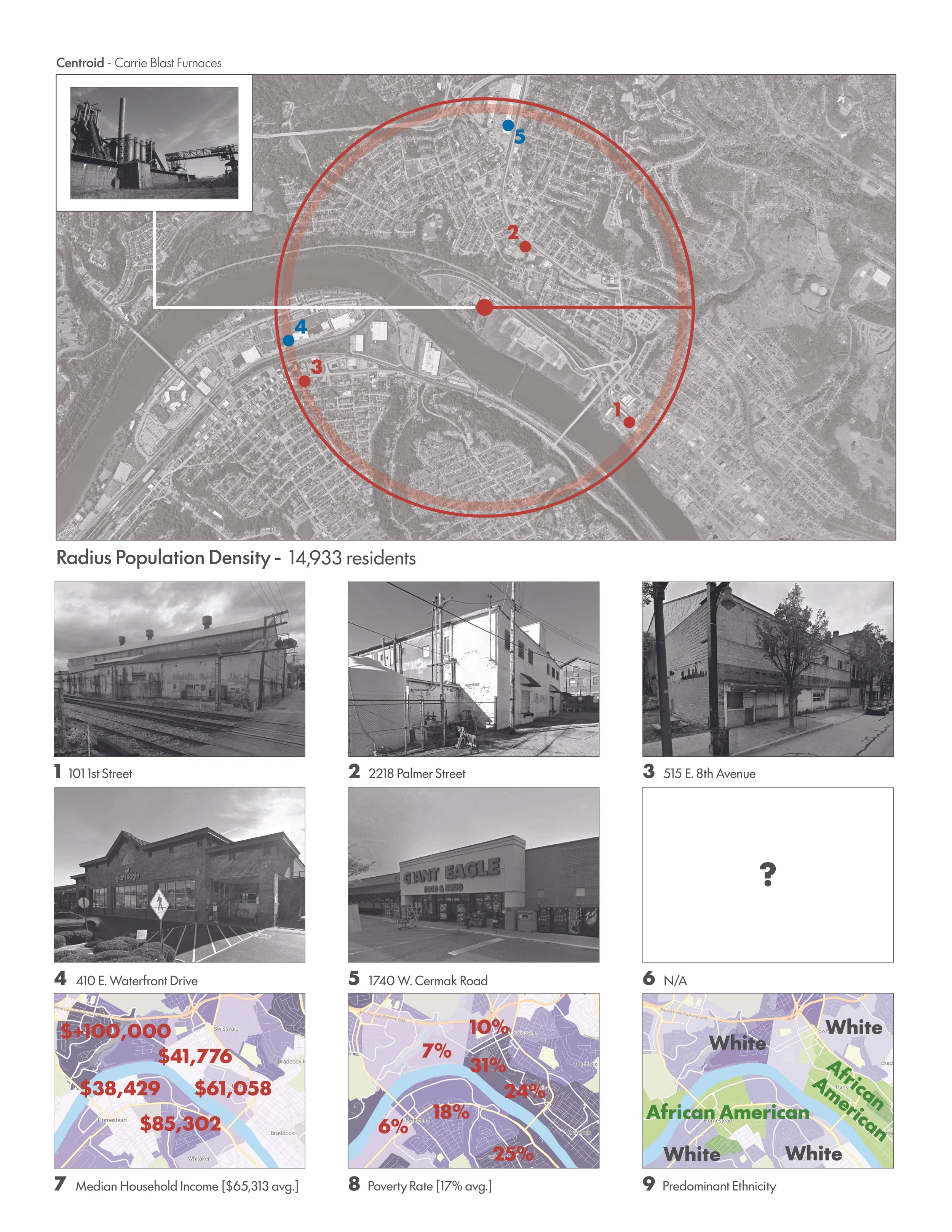
Pittsburgh offers a hyper-specific challenge due to its rugged terrain. The collapse of the steel and heavy coal industries left concentrated pockets of vacancy in valley floors like Hazelwood. However, the city's steep hillsides and limited bridge crossings physically cut neighborhoods off from standard grocery access.
The land itself is often physically compromised. Real-world data from the Hilltop Urban Farm project revealed a massive hurdle. The ground consisted of just zero to three inches of topsoil layered over thick concrete, brick, and debris from demolished public housing structures. Traditional ground-based farming is structurally impossible under these conditions. By employing soil-free greenhouse hydroponics and vertical farms, the model completely bypasses the contaminated, rubble-filled ground and the fragmented landscape. This allows practitioners to inject fresh food directly into isolated valley neighborhoods.
Detroit
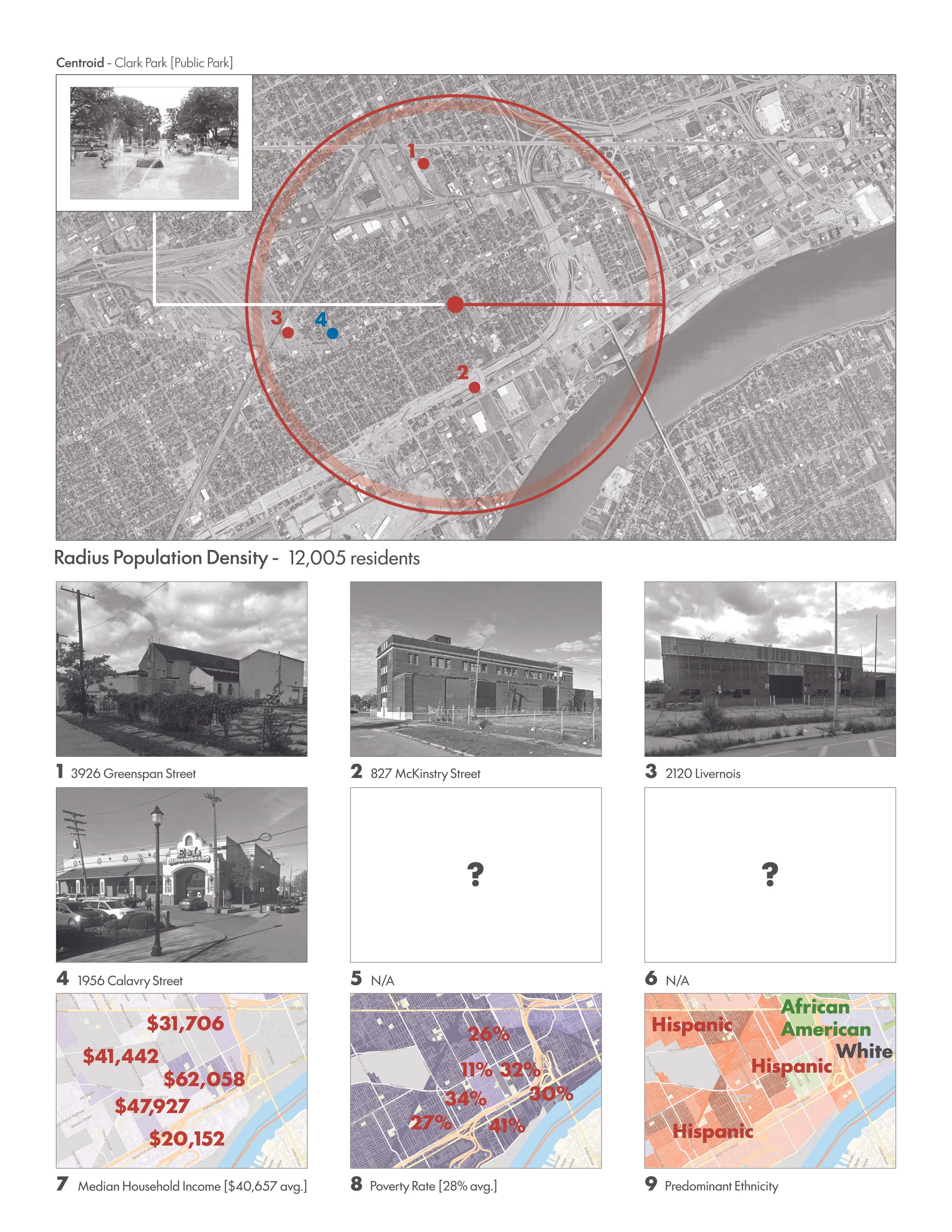
Detroit represents the most dramatic case of post-industrial vacancy. After a historic population drop from 1.85 million in 1950 to under 700,000, the city was left with an estimated 24 to 40 square miles of vacant land. Unlike Chicago's neat corridors or Pittsburgh's isolated valleys, Detroit's vacancy is completely woven through the fabric of residential neighborhoods.
This widespread geographic abandonment directly mirrors severe food insecurity and lower produce quality in low-income communities of color.
Because vacancy is peppered directly next to homes, a distributed greenhouse network can sit right where people live. The Detroit Land Bank Authority controls over 62,000 vacant lots, and many are available for as little as 100 dollars. Aligning with the Detroit Future City Strategic Framework, which states that vacancy should be viewed as a strategic asset rather than a blight, the Cyclical City leverages cheap land acquisition to build a hyper-local food safety net.
““Vacancy should not be viewed as residual blight but as strategic assets when leveraged for targeted investments and community benefit.””
Where Current Instruments Fall Short
While existing municipal programs offer great entry points, conventional policies still present massive roadblocks for wide-scale deployment. Current instruments fall short in three major ways:
Zoning Restrictions: Many commercial zones outright prohibit food production as a primary land use.
Rigid Infrastructure Rules: Strict minimum parking requirements frequently consume the exact ground-plane footprint needed to build a greenhouse layout.
Liability Hurdles: Legal structures around contaminated land often scare away project development, requiring new subsidies that treat food security as an eligible outcome for brownfield funding.
Hidden Risks and Collaboration: Gentrification and Rural Knowledge Transfer
An honest look at urban agriculture requires addressing two vital human elements: who keeps the land, and where the expertise comes from.
First, we must acknowledge the threat of green gentrification. Turning an empty lot into a beautiful, productive greenhouse can cause nearby land values to skyrocket, unintentionally displacing the low-income residents the project was meant to serve. To prevent this, the paper highlights that community land trusts and resident-owned governance structures must be established from day one.
Second, cities do not have to reinvent the wheel. Agricultural expertise already thrives in rural communities and land-grant university extension programs. The Cyclical City serves as a bridge for rural-urban knowledge transfer. By hosting educational programming and university extension services directly inside the farm nodes, these spaces evolve from technical production facilities into genuine civic institutions.
Urban Farms as Mixed-Use Civic Infrastructure
The ultimate goal of the Cyclical City is not just to churn out leafy greens. The model designs these farms to be mixed-use civic anchors. A single reused building can feature a vertical farm, an on-site retail market, educational programming, workforce development classrooms, and community kitchens.
Evidence shows that injecting fresh food infrastructure into underserved areas serves as a high-volume anchor that generates foot traffic and attracts complementary businesses like pharmacies and banks. For instance, Pennsylvania's Fresh Food Financing Initiative helped develop 78 fresh food outlets. This project created or retained over 4,800 jobs, and 75% of those positions were filled by local residents living within three miles of their workplace.
By treating vacancy not as a failure, but as an infrastructure of possibility, we can transform legacy districts into productive urban ecosystems. We can build regeneration right into the concrete shells of our history.
““The right to the city is far more than the individual liberty to access urban resources: it is a right to change ourselves by changing the city.””