Litnoy Fyr - Roam
LITNØY FYR - ROAM
RESEARCH ORIENTED ADAPTIVE MODELS

Location: Litløy Fyr, Norway
Competition: Re:Form - New Life for Old Spaces 2025
Project BRIEF
In a world facing urgent environmental and spatial challenges, the most sustainable solutions may come not from new construction, but from reimagining what already exists. Participants are free to choose any existing structure—whether currently in use, abandoned, or neglected—anywhere in the world. From unused storefronts and aging sheds to underutilized garages or portions of larger buildings, the project should demonstrate the potential to transform a limited footprint into something innovative and impactful. The designs should focus on sustainability, functionality, and broader community impact, showing how adaptive reuse can address contemporary challenges.
PROJECT DESCRIPTION
Lighthouses have long stood as sentinels of the sea as icons of resilience and connection. Strategically positioned along coastlines, they were once indispensable to maritime navigation, their beacons piercing through fog and storm to guide ships safely to shore. In many ways, lighthouses mark the intersection of engineering and poetry: isolated yet essential, simple in form yet rich in symbolism. As trade and exploration expanded over centuries, these structures became anchors for coastal settlements and catalysts for economic growth. Architecturally, they vary from monolithic stone towers to slender iron spires, each reflecting the geography, climate, and culture of its location. However, in the wake of GPS technology and automated systems, these once-crucial buildings have largely been rendered obsolete. Many now sit unused, exposed to the elements, their stories battered by the salt and wind.
The proposed solution for this Re:Form competition entry envisions the transformation of one such remote lighthouse into a modern research station. We preserve its historical presence and expand its capabilities with new architectural interventions inspired by modularity and innovative research techniques. These additions (a series of movable pods) are situated on the Ridge, adjacent to the original lighthouse. Drawing from vernacular timber-clad geometries, the new structures would echo the landscape and climate while providing functional spaces for environmental research and observation in varying site conditions.
PROJECT LOCATION
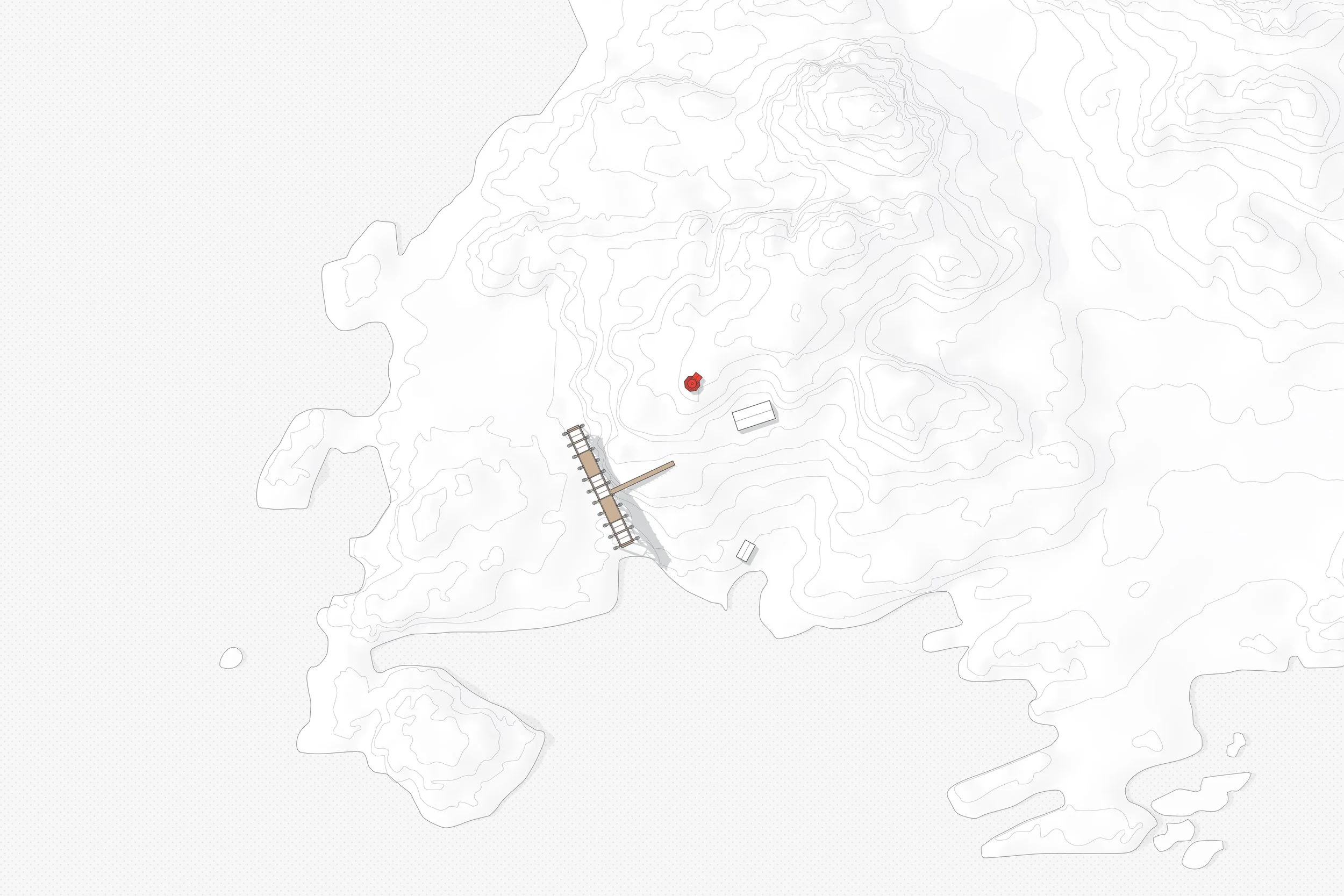
Litløy Fyr - Existing Littleisland Lighthouse
68°35’37.1”N 14°’29.7”E
“The Ridge” was developed in order to situate researchers and provide a homebase for the ROAM. In which the researchers can have the capabilities to traverse a multitudes of areas on the coast to collect data and preserve coastal conditions.
The “LITLØY FYR” Lighthouse serves as a crucial locational node for coastal research and action-oriented topical interests. The coast of Norway begins to lose its natural vibrancy, the coastal kelp forest has diminished, and geological life is next…
In order to maintain the coastal properties a unique solution that traverses all environmental factors was established.
Set on the outer edge of the Vesterålen archipelago, Litløy Fyr occupies a small, exposed island where land, sea, and sky meet with unusual intensity. Litløya is a rugged Atlantic outcrop – rocky, sparsely vegetated, and shaped by wind, salt, and weather – rising gently toward its interior peak while breaking sharply against the Norwegian Sea. From the lighthouse, the horizon opens westward to uninterrupted ocean and distant silhouettes of Lofoten, while eastward views reconnect the island to the broader archipelago and the mainland beyond. The site is defined by constant environmental flux: rapidly shifting weather systems, powerful winds, and dramatic variations in light, from the perpetual glow of the midnight sun to the extended twilight and winter darkness, often animated by the aurora borealis. Access itself is a threshold experience, marked by a boat crossing and a short ascent from shore that compresses the transition from sea to structure. Surrounding the lighthouse are traces of long human presence – remnants of former fishing settlements, ancient cairns, and archaeological sites – embedded within a landscape now largely reclaimed by nature.
Today, the lighthouse is privately operated as a high-cost short-term rental, marketed as an exclusive and isolated retreat. While this use capitalizes on the site’s remoteness and dramatic atmosphere, it frames the lighthouse primarily as a commodity rather than a shared cultural artifact, limiting public access and reducing a historically collective maritime landmark to an individual, transactional experience.
SUSTAINABILITY
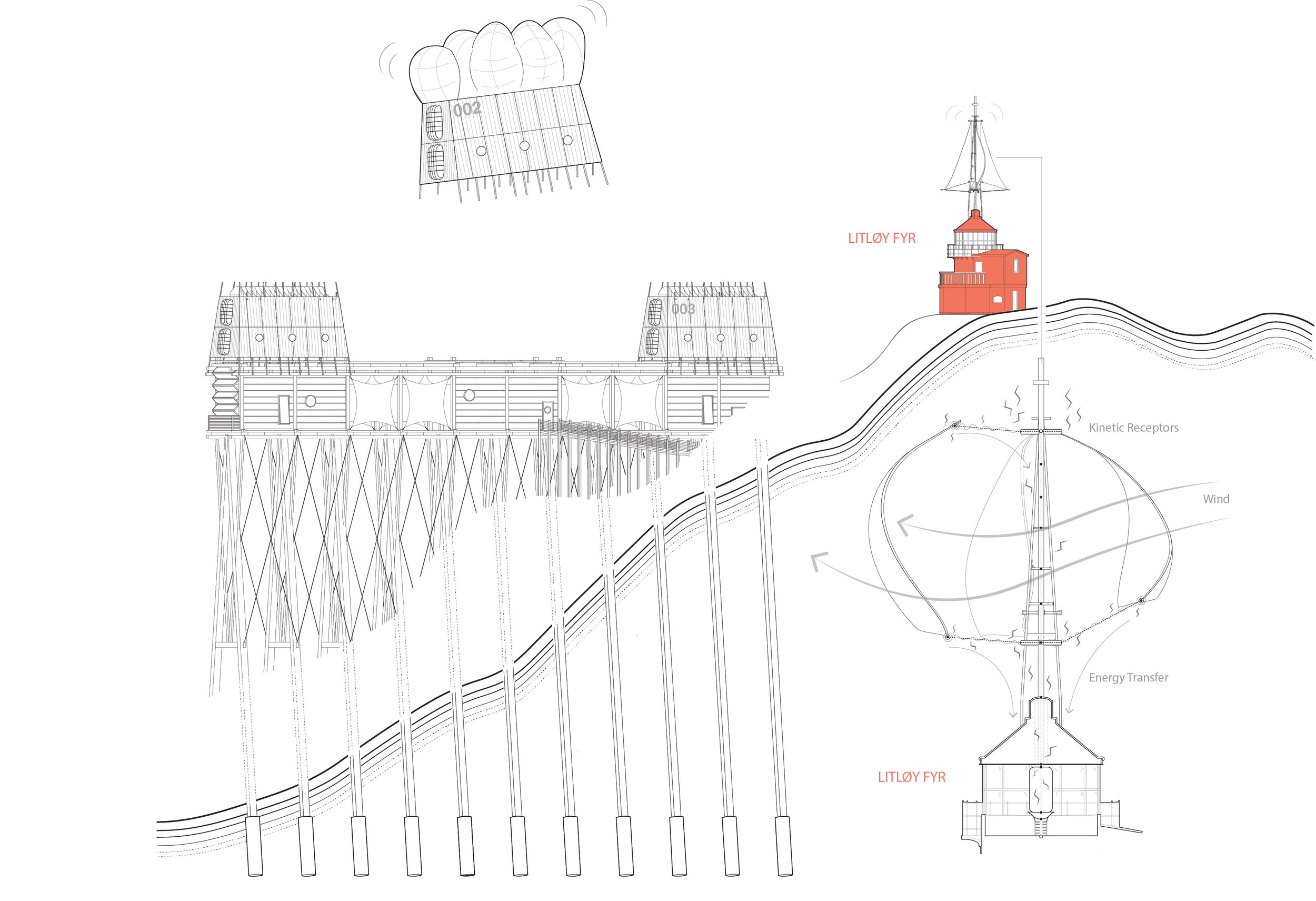
Integrated wind capture and kinetic architectural elements allow the site to generate and store its own power, embodying a closed-loop system of sustainability. The adaptive reuse of the lighthouse is not only a cultural and scientific gesture but a demonstration of how existing infrastructure can be reimagined to serve future needs. As sea levels rise and weather becomes increasingly volatile, lighthouses - redefined in this way - may once again play a vital role. Not in warning us of danger, but in helping us understand and respond to the shifting rhythms of the planet.
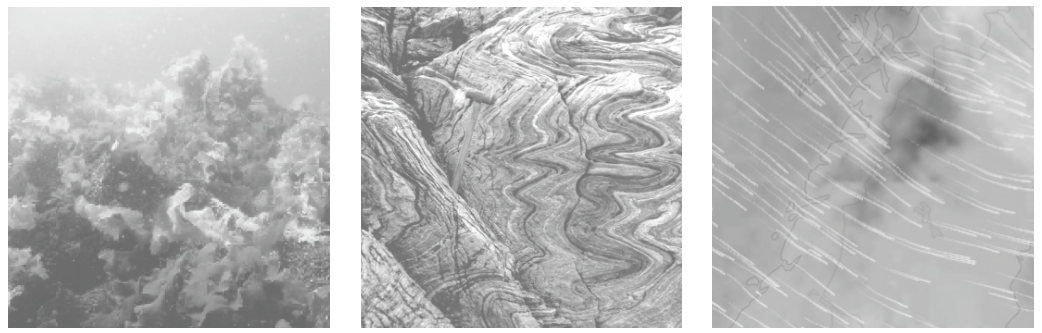
01 Kelp Deforestation 02 Metamorphic Rocks 03 Wind Studies
R.O.A.M PODS
Distributed across Litløya, the ROAM PODs are lightweight, multi-functional research structures designed to operate in direct continuity with the island’s extreme terrain and shifting environmental conditions. Rather than occupying fixed sites, they move deliberately through the landscape: traversing steep, uneven ground on omnidirectional articulated legs, floating across ponds and coastal waters on a buoyant flotation base, and drifting through the air by means of a controllable inflatable element. This capacity for terrestrial, aquatic, and aerial movement allows each POD to engage the island as a dynamic field rather than a static backdrop.
Collectively, the PODs form a mobile network of observation, inhabitation, and study – temporarily touching the land without permanently marking it. Their presence is intentionally light and reversible, enabling research, reflection, and environmental engagement while preserving the fragile ecological and historical character of Litløya.
01 Aquatic Research
02 Geological Research
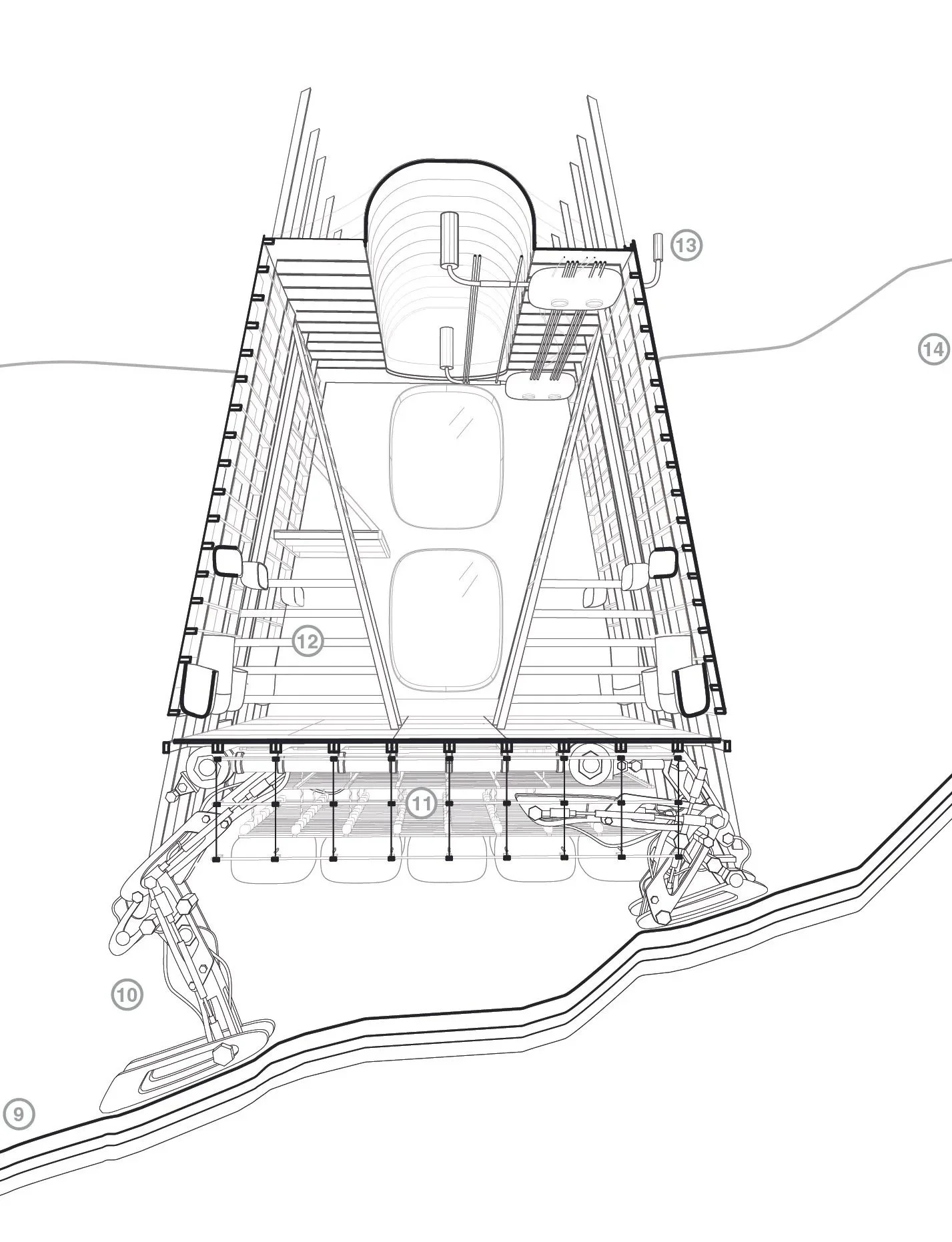
The POD’s terrestrial mobility is enabled by an array of independently actuated, omnidirectional legs. Each leg is composed of multiple articulated joints—allowing rotation, extension, and controlled flexion—driven by electric actuators and guided by real-time terrain sensing. This system enables the legs to adapt continuously to changes in slope, surface texture, and load distribution, maintaining a stable body orientation even on fractured rock or steep inclines. Load-balancing algorithms coordinate the legs as a collective system rather than as isolated supports, allowing the POD to step, brace, or anchor itself with precision while minimizing point pressure on the ground.
03 Wind Energy Research
The Ridge Plan
The Ridge
At the island’s topographic crest, the PODs converge at “The Ridge,” a mass-timber structure anchored into the highest and most stable terrain on Litløya. Conceived as both infrastructural core and architectural mediator, the Ridge functions as the collective home base for the mobile research network. Here, the PODs dock and recharge, drawing power from energy-collection systems adapted and expanded from the lighthouse itself, while transferring data samples and personnel between field and base.
The Ridge houses all permanent and sensitive research tools and technologies, spaces that require environmental control, precision, and long-term stability. Its mass-timber construction establishes a tactile and structural continuity with the island’s material logic, offering resilience against wind and weather while maintaining a measured, grounded presence within the landscape. Spatially and operationally, the Ridge remains in constant dialogue with the lighthouse: networked and responsive to its systems, yet distinct in function.
Through this relationship, the lighthouse is no longer a relic or a privatized retreat. It is reactivated as a working instrument – once again a beacon, not for navigation alone, but for research, experimentation, and collective inquiry – reclaiming its role as a functional center of innovation embedded within the life of the island.
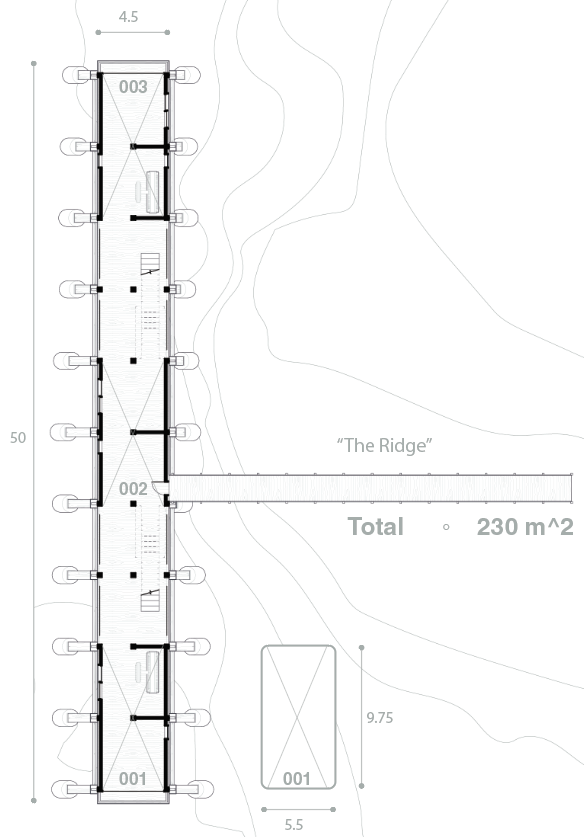
Linear and proportionally thin, the plan cuts through the Ridge’s primary occupiable level, revealing a continuous infrastructural spine that houses generators, charging interfaces, and semi-permanent research technologies supporting island-wide operations.
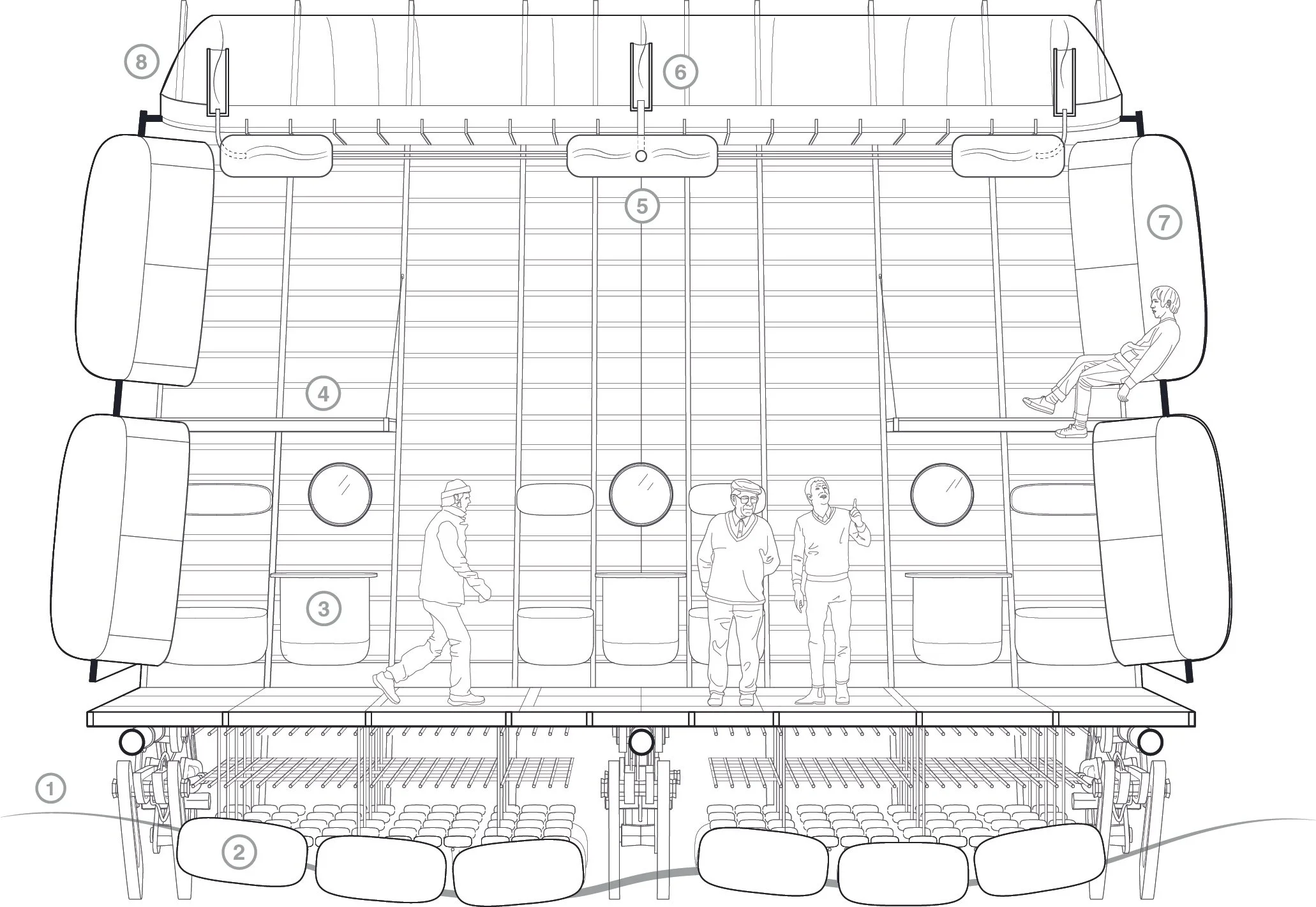
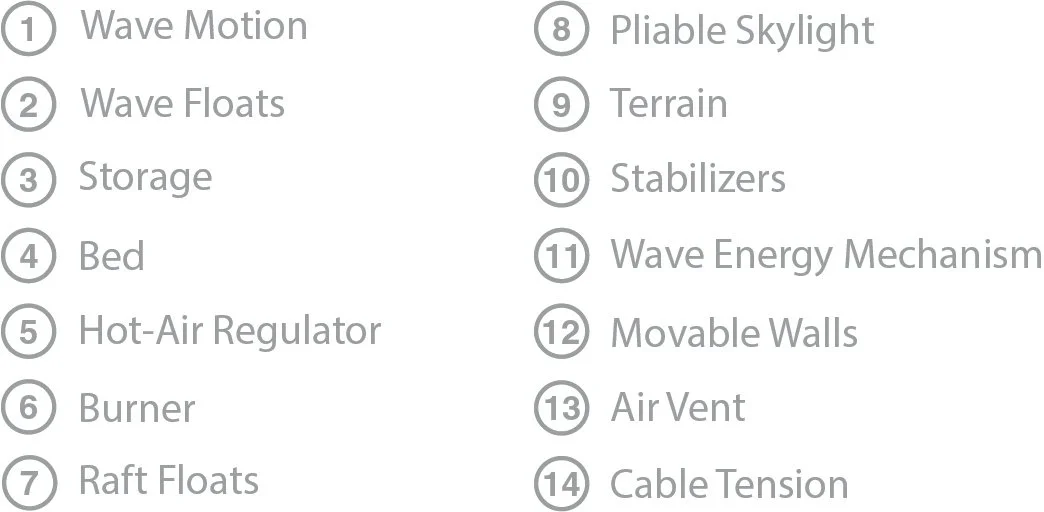
POD Interior
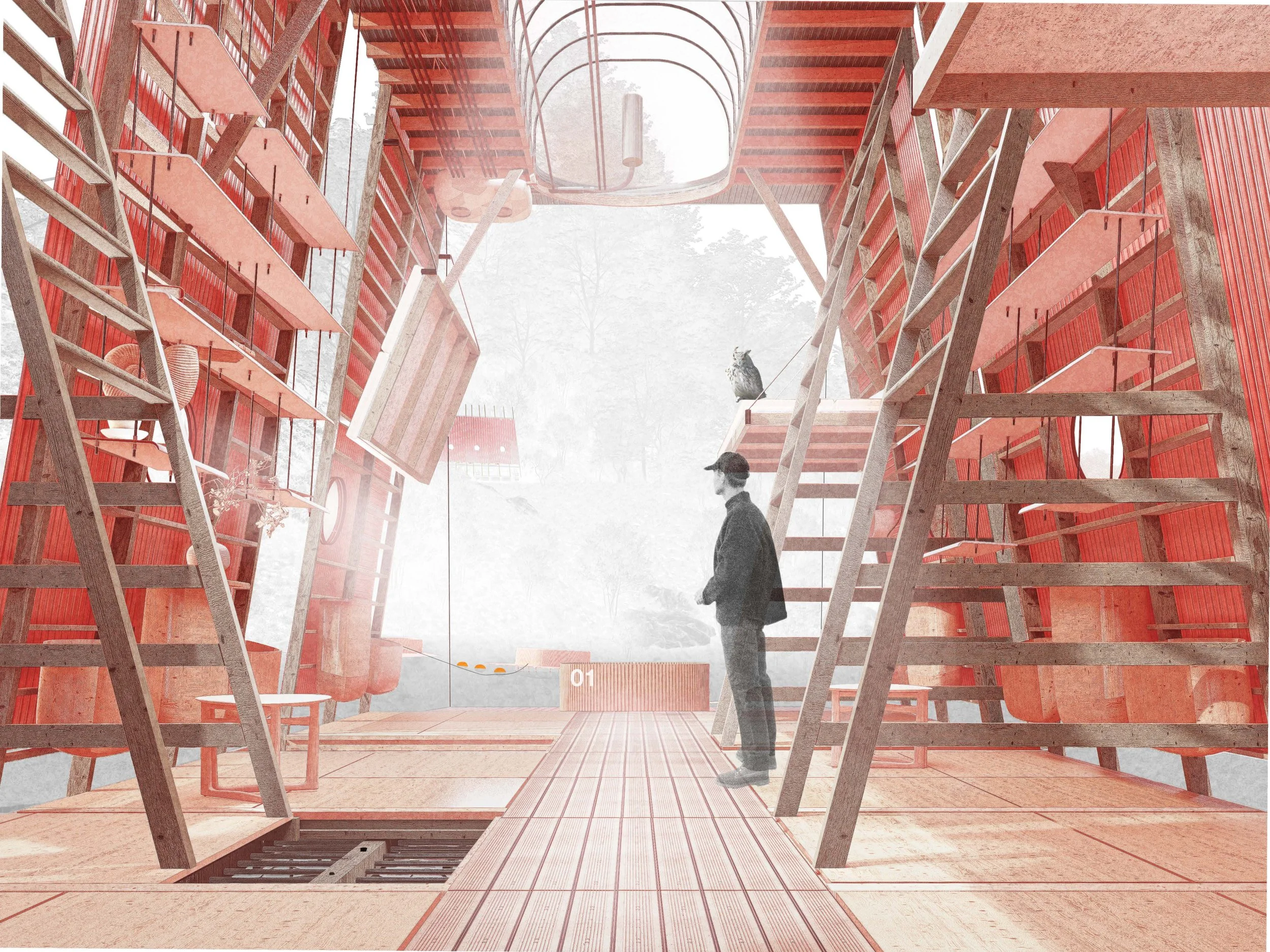
A compact, adaptive workspace where integrated instrumentation, fold-away furnishings, and built-in storage support research, analysis, and short-term inhabitation within a lightweight, mobile structure.
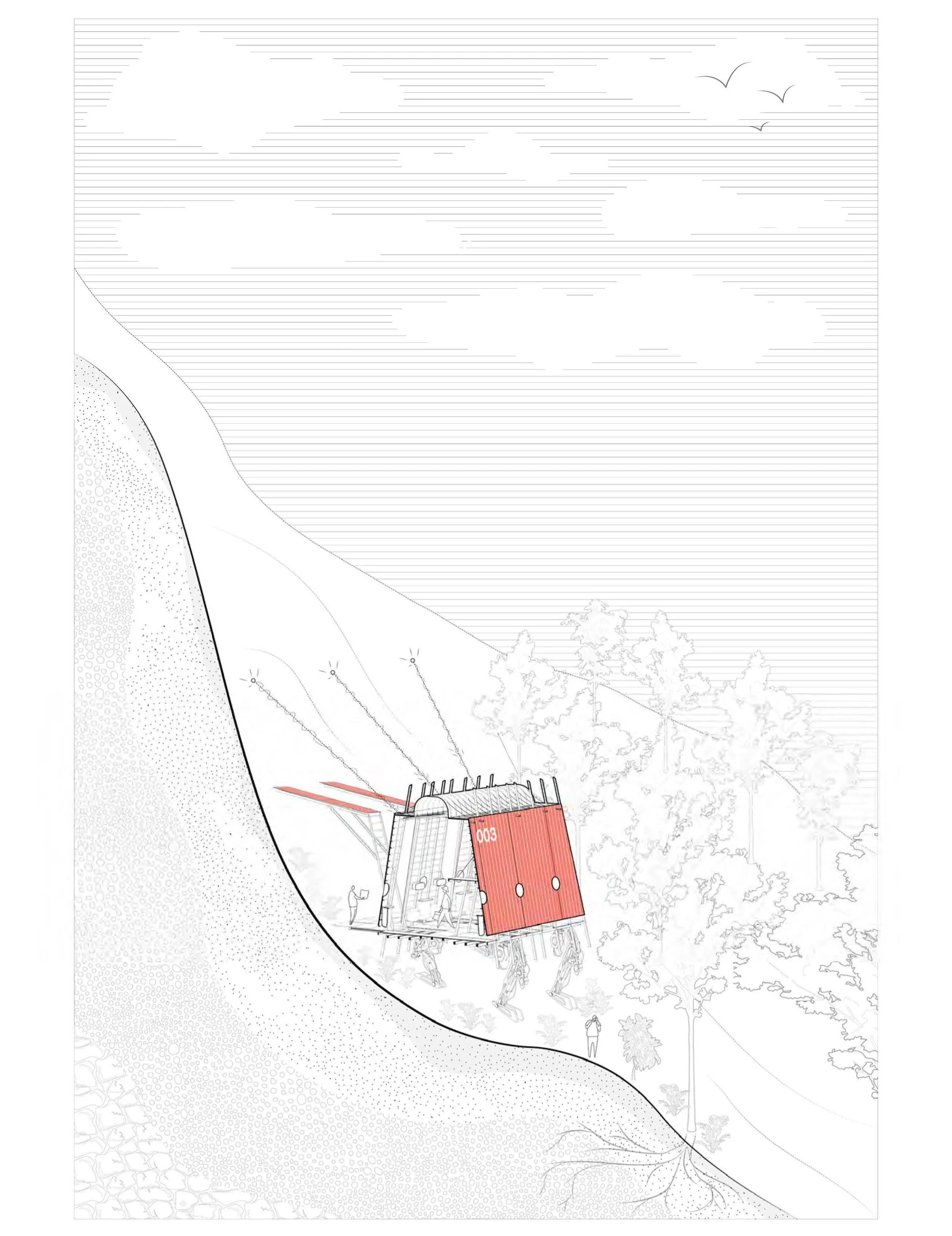
Terrain Detail
Section through the lighthouse showing the integration of wind-capture technology, where a sail mounted atop the existing structure harvests prevailing winds to generate power for the broader research campus.
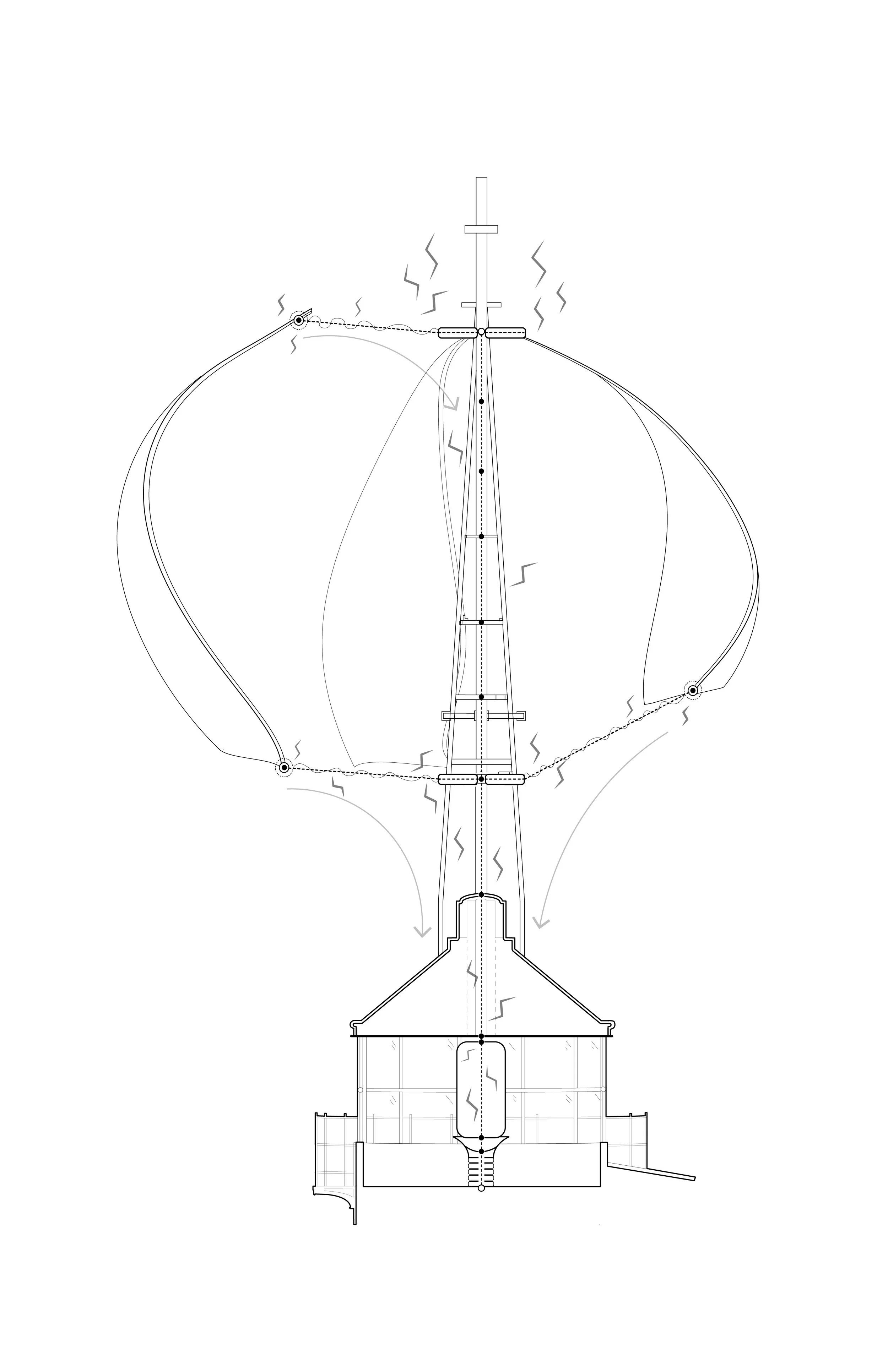
Lighthouse Section
The POD’s terrestrial mobility is enabled by an array of independently actuated, omnidirectional legs. Each leg is composed of multiple articulated joints—allowing rotation, extension, and controlled flexion—driven by electric actuators and guided by real-time terrain sensing. This system enables the legs to adapt continuously to changes in slope, surface texture, and load distribution, maintaining a stable body orientation even on fractured rock or steep inclines. Load-balancing algorithms coordinate the legs as a collective system rather than as isolated supports, allowing the POD to step, brace, or anchor itself with precision while minimizing point pressure on the ground.
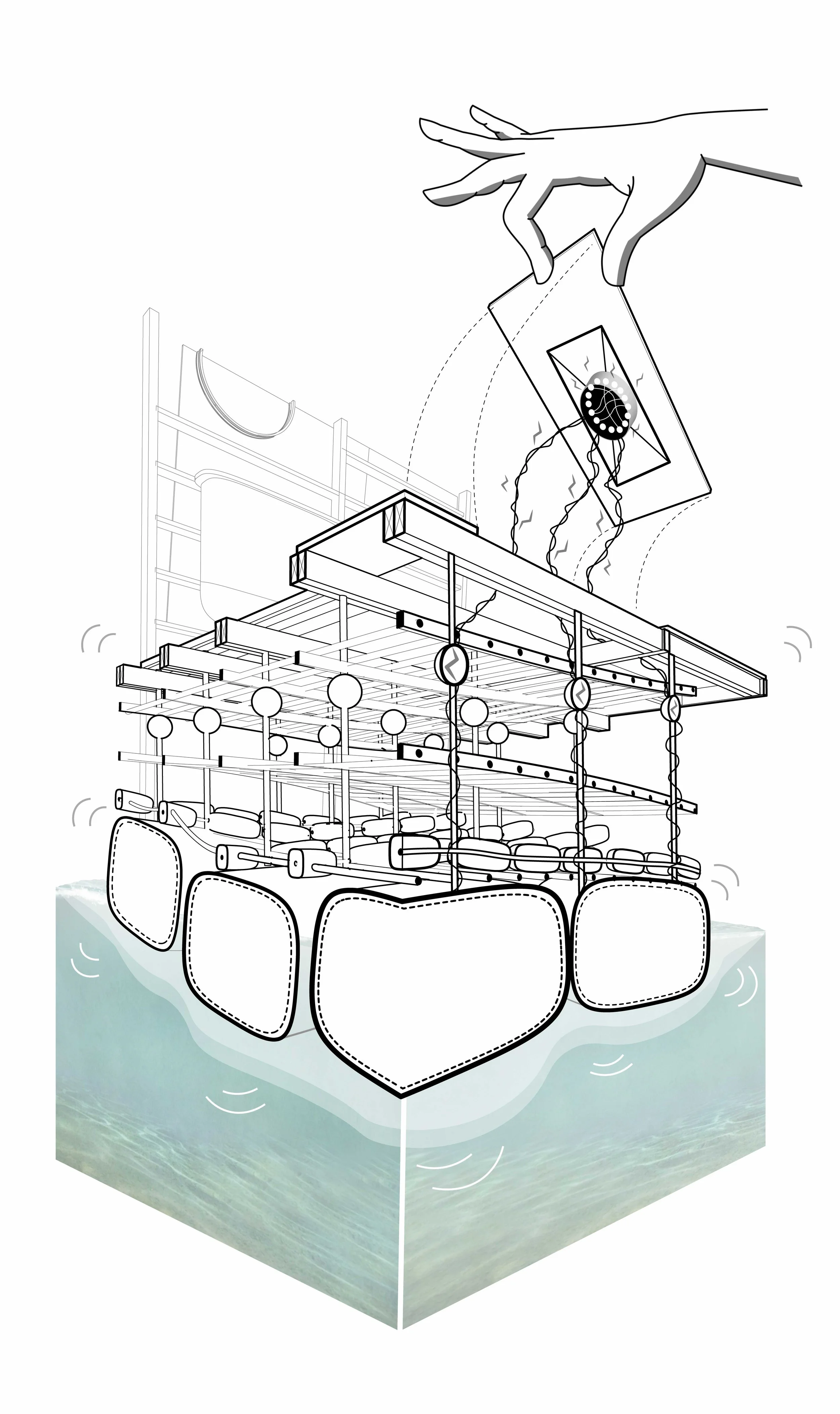
Raft Detail
WAVE HARNESSING
For aquatic operation, the POD employs a modular flotation base composed of multiple sealed inflatable pontoons rather than a single buoyant chamber. Each pontoon is independently pressurized and compartmentalized, providing redundancy and stability in rough water conditions. This distributed buoyancy allows the POD to remain afloat even if individual chambers are compromised, while dynamic pressure control enables it to adjust its center of buoyancy in response to wave action. The inflatable elements are fabricated from abrasion-resistant, marine-grade membranes, allowing the POD to absorb impact, dampen motion, and maintain equilibrium as it drifts or stations itself in open coastal waters.
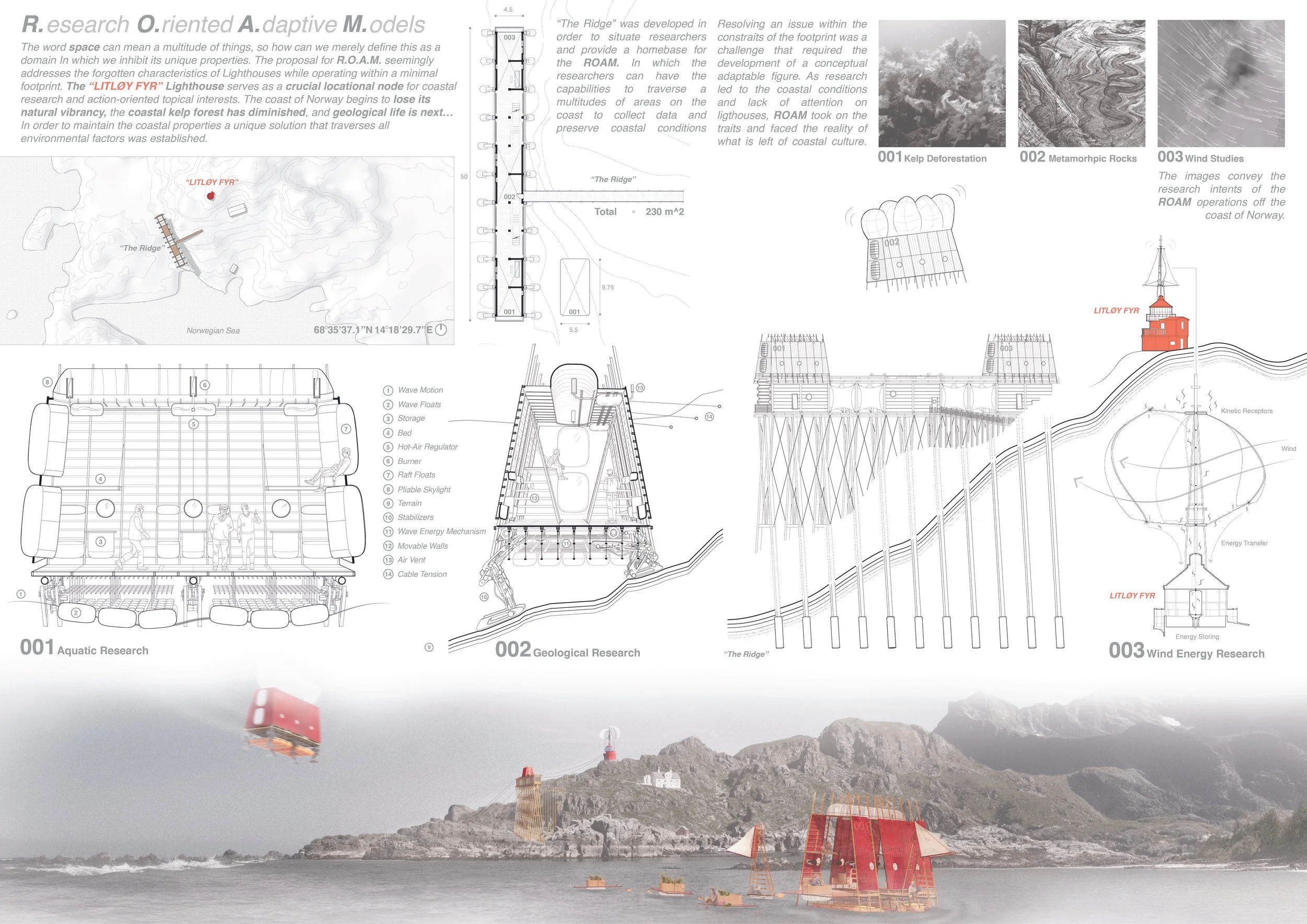
To view the full high-resolution presentation board click here.